' ' Cinema Romantico: Certain Women
Showing posts with label Certain Women. Show all posts

Monday, February 20, 2017

Countdown to the Oscars: 5 Moments That Made the Movies in 2016


Is there anything more noxious than corporate team-building exercises, attempts by synergy shamans with powerpoint presentations and comprehensive handouts at the behest of higher-ups who do not care in any way, shape or form about who their underlings really are to force those underlings to forge some sort of faux-bond that could be severed at a moment’s notice since everyone - who are you again? - is expendable anyway. Ugh. In “Toni Erdmann”, however, which spends much of its considerable running time deconstructing and skewering the impersonality and inanity of corporate culture, the team-building exercise gets viciously, hilariously sent up, melding management training with an “Eyes Wide Shut”-style soiree which is gloriously WTF? as it sounds, finally, at long last, making “adaptability”, “problem solving” and “trust building” count for something real.


Pablo Larraín’s “Jackie” is based on a real person – that is, Jackie Kennedy, Mrs. John F. Kennedy, First Lady of the United States. But it is also very much not about a real person, more about a myth, the one she shrewdly sculpts to preserve her husband’s legacy in the immediate aftermath of his terrible death, but also her own myth, which we see her shaping during and after. You see this in the movie’s most incredible shot, during the famous funeral procession, which becomes not a march to the cathedral but to Camelot, which Larraín sets at a low angle, looking up, with the gleaming sun at Jackie’s one o’clock and her black veil fluttering in the breeze, revealing her face and then obscuring it again. No, it’s not new to demonstrate the power of the moving picture to allocate immortality but what the hell’s wrong with a finely rendered reminder? Nothing, that’s what, and that’s what this is. She is Natalie Portman; she is Jackie Kennedy; she is a Movie Star. 


There are myriad moments in Kelly Reichardt’s “Certain Women” that revel in reticence, but none more so than the anti-climactic cum climactic drive Lily Gladstone’s nameless Rancher takes in her truck. This happens immediately after she has made an impassioned if terribly awkward confession, kind of, to the lawyer (Kristen Stewart) on whom she has a crush. The lawyer, distracted and perplexed, does not even seem to quite know what is happening just as the Rancher does not quite seem to know what she is doing or saying, essentially retreating before she is even finished saying it. And once back in her truck, the whole spectrum of human emotion, every last one on the Emotion Classification chart, mixes and matches on the face of Gladstone, an astonishing rendering of how agony can lay us bare. 
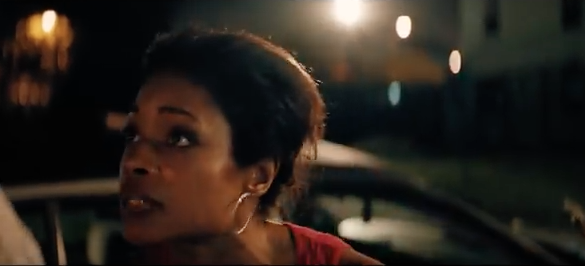

So much of “Moonlight” is centered on the idea that the lives we lead are a product of the circumstances into which we are born, and no matter how much we may try to resist or get out, we are pulled in anyway, powerless. This is illustrated by the way in which the movie comes full circle in the plight of its protagonist Chiron, underlined by the way in which the camera often circles its characters, and vigorously brought home in the scene where Chiron’s self-appointed sort of mentor and emotionally fraught mother meet in the street. She needs to buy drugs; he sells drugs; he chastises her for buying drugs when she has a son; she chastises him for selling drugs when he looks after her son; so it goes. They stand there, her growling, him grimacing, both right, both wrong, a quick, indelible re-telling of a never-ending story.


As the 2016 American Presidential Election drew nigh and then unspooled, story after story appeared in all manner of publications about small town Americans being left behind and counting on our newly elected to President to remake this country the way it was. But what was ain’t coming back, it never is and it never does, and Texas Ranger Alberto Parker (Gil Birmingham) in “Hell or High Water” coulda told you that. A Native American, he is subject to much pointed joshing from his not inconspicuous racist superior Marcus Hamilton (Jeff Bridges), most of which washes over Alberto, not because he’s indifferent but because his people have been screwed over so long, with so much of the screwing over coming so long ago that no one wants to be bothered to remember. Not that he is about to let Marcus forget. In a scene set on the corner of a four corner town across from a Texas Midlands Bank, Alberto can only shrug as Marcus laments the way of life dying all around them. “One hundred and fifty years ago,” Alberto says, “all this was my ancestors’ land. Everything you could see. Everything you saw yesterday. Until the grandparents of these folks took it. And now it’s been taken from them. Except it ain’t no army doing it.” And with that, he directs his index finger toward the bank.

“It’s those sons of bitches right there,” he says.

Thursday, January 05, 2017

A Movie Shot From 2016 To Go Home With You

Kelly Reichardt has always opted for minimal narratives and sparse dialogue, preferring to tell her stories through mood, frames and faces. 2016’s “Certain Women” was no different. Telling three different stories of three different women, she begins with a little plot in the first story, hacks away a bit more plot in the second, and leaves us with next to nothing in the last, making Lily Gladstone’s face the preeminent star of the show. Playing a lonely rancher, so isolated from anyone else that she walks into some class she’s never been to for something she’s unfamiliar with, just to hear other people talk. That includes the instructor Beth (Kristen Stewart), who drives all the way in from Livingston, a few hours away, and becomes, unwittingly, the object of the rancher’s affection. The rancher, however, is too timid to really explain how she feels and Beth is too distracted to deduce how the rancher feels and so the whole thing, despite a few brief meals and conversations, just sort of sits there in a holding pattern.

When Beth quits the class, the rancher hops in her truck and drives to Livingston, without an explanation, because who’s she gonna tell? It’s just her, which is made that much more apparent when she arrives in Livingston, she walks the nighttime streets, hands in her coat pockets, silently, peering into windows, a daydream grin on her face, because to her these windows may as well be the holiday window displays at department stores in New York City.


Another director might have cut this sequence. Isn’t she here to see Beth? What does this have to do with anything? But Reichardt knows one shot can explicate volumes. And as the rancher strolls by some warmly lit cafe, peering in, the framing lets you feel both the curiosity and the distance.

The rancher is always outside looking in.

Monday, November 14, 2016

Certain Women

“Certain Women”, based on short stories by Maile Meloy, features three different vignettes with three different women. Characters from each vignette occasionally cross paths with others, but director Kelly Reichardt, who adapted the screenplay, mostly ties these tales together via the main characters’ similarly stifled emotions and lives they struggle to wrest joy and meaning from. You see that immediately in the first scene, where Laura (Laura Dern) and Ryan (James Legros) are currently in the midst of an illicit rendezvous, given the mid-afternoon motel location, as she rubs her socked foot against Ryan’s back. This act, however, exudes less passion than quiet pay-attention-to-me desperation. He doesn’t pay much attention. They talk about the color of her sweater. God, that’s so Reichardt.

Another movie might have employed this affair as an inciting incident, but it’s quickly brushed past as Ryan breaks their relationship off in barely so many words before Laura’s own narrative is essentially co-opted by a different male, Fuller (Jared Harris), a client who keeps showing up at Laura’s law firm. Nominally he yearns to sue for workplace injury, but just as much he is looking for someone to talk to, though he never really listens to what she has to say in return. Indeed, though she has repeatedly told him he can’t sue because he accepted a settlement, Fuller only takes this as a gospel upon hearing it from a male judge.


Eventually, Fuller returns to his old workplace and takes a hostage, and Laura is enlisted to try and talk him down. These moments are played less for tension, however, than drollness, like Laura is a mother forced to clean up an angry adult toddler’s mess. And the seeming confrontation ends limply, and this story intentionally ends without any real sense of who Laura is because she is forced for the duration of the episode to set herself aside, to keep everything she feels in, to give this guy a shoulder to cry on, which she does, nearly literally, in a scene as comical as it is sad when he breaks down sobbing in her car that is set to a Guy Clark song about usurping the sameness of things which you sense in Laura’s quiet weariness is what she so terribly yearns to do.

In the second story we return to Ryan, though the tale truly belongs to Gina (Michelle Williams), his wife. Ryan does not co-opt his spouse’s story, however, so much as exist outside of it, emblemized in the opening moments where she has a covert cigarette on a walk in the woods, and then walks in on Ryan sharing a joke with their daughter (Sara Rodier) that Gina doesn’t get. These moments demonstrate a fissure in this family, as does a simple if nevertheless striking image where Gina and Ryan sit vacantly in the front seat of their truck while their daughter sits in back, tuned out to her iPod.

Gina has apparently decided the solution to this family crisis is to symbolically rebuild their familial foundation by erecting a new family home in a pristine spot of wilderness. To do so, however, she wants to acquire a pile of sandstone that an old man they know, Albert (René Auberjonois), has sitting unused in his yard, and so Gina and Ryan stop by Albert’s for a folksy negotiation. This scene, in which the senile Albert can’t quite stay on topic, drifts from his ingrained attitude toward addressing the male more than the female to his lament that he and his brother intended to use that sandstone to build a deck. The latter never happened, so sure, Gina and Ryan can have it, but in the ensuing sequence where they come to pick the sandstone up, the old man watching from a window leaves you wondering if he’s heartbroken to see it go, heartbroken to see it go to a woman, or if he knows that it can’t fill the void like she hopes. It’s classic Reichardt Ambiguity, or maybe it’s just all three at once.

The ultimate passage is less abstruse, if even more minimalist, where an isolated rancher (Lily Gladstone) is so lonely she wanders one night into a class about school law, a topic which bears no meaning for her, just because it promises a little company. That company winds up being the instructor, Beth Travis (Kristen Stewart), a put out, stressed out lawyer from Livingston who makes the 4 hour trek, each way. After class they visit the local diner, where Beth orders food she never seems to finish while the rancher, who is never named, mostly just sits on the other side with a glass of water, replying to whatever question Beth absent-mindedly thinks to pose. This story is comprised of three classes and three meals, until Beth doesn’t show and the Rancher gets in her car with nary a word and drives to Livingston.


This is something like Big Sky neorealism, where Gladstone gives a humongous performance in the smallest of ways, simply allowing her shy manner, whether by smiles that come across as sad as polite, or a vocal delivery evoking someone who hasn’t been around anyone for long stretches of time, to pull you in. Stewart, meanwhile, is the perfect partner, not cold but so distracted that she remains oblivious to the romantic pull she has on her new sorta friend, even to the end, when suddenly the Rancher is there in the parking lot of her law firm.

This, like everything else, is a passage Reichardt handles with a wrenching undemonstrativeness. If it is impulsive, even passionate move, it plays more of muted innocence, like in the night before the Rancher tracks down Beth where she wanders the streets of Livingston, reminiscent of a big kid who has unexpectedly wound up at Disneyland. And when she does see Beth, a lifetime of not really having any words to say, which is what Gladstone’s entire performance delicately sculpts, comes to bear, and she doesn’t know how to communicate the way she feels. It’s not that Beth rejects her, because Stewart doesn’t even really let Beth reject her, just standing there more in early morning, confusedly squinting, uncaffeinated mystification more than anything. Gladstone lets the Rancher feel rejection anyway, like she expected it, and when she gets back in her truck to commence the long drive back all we are left with is Gladstone’s face.

Gladstone’s face becomes the biggest thing in the movie. With each successive story, the more Reichardt chips away at narrative conventions, until, by these last frames, all that’s really left are emotions splayed across one person’s face.