' ' Cinema Romantico: Moonlight
Showing posts with label Moonlight. Show all posts

Monday, February 20, 2017

Countdown to the Oscars: 5 Moments That Made the Movies in 2016


Is there anything more noxious than corporate team-building exercises, attempts by synergy shamans with powerpoint presentations and comprehensive handouts at the behest of higher-ups who do not care in any way, shape or form about who their underlings really are to force those underlings to forge some sort of faux-bond that could be severed at a moment’s notice since everyone - who are you again? - is expendable anyway. Ugh. In “Toni Erdmann”, however, which spends much of its considerable running time deconstructing and skewering the impersonality and inanity of corporate culture, the team-building exercise gets viciously, hilariously sent up, melding management training with an “Eyes Wide Shut”-style soiree which is gloriously WTF? as it sounds, finally, at long last, making “adaptability”, “problem solving” and “trust building” count for something real.


Pablo Larraín’s “Jackie” is based on a real person – that is, Jackie Kennedy, Mrs. John F. Kennedy, First Lady of the United States. But it is also very much not about a real person, more about a myth, the one she shrewdly sculpts to preserve her husband’s legacy in the immediate aftermath of his terrible death, but also her own myth, which we see her shaping during and after. You see this in the movie’s most incredible shot, during the famous funeral procession, which becomes not a march to the cathedral but to Camelot, which Larraín sets at a low angle, looking up, with the gleaming sun at Jackie’s one o’clock and her black veil fluttering in the breeze, revealing her face and then obscuring it again. No, it’s not new to demonstrate the power of the moving picture to allocate immortality but what the hell’s wrong with a finely rendered reminder? Nothing, that’s what, and that’s what this is. She is Natalie Portman; she is Jackie Kennedy; she is a Movie Star. 


There are myriad moments in Kelly Reichardt’s “Certain Women” that revel in reticence, but none more so than the anti-climactic cum climactic drive Lily Gladstone’s nameless Rancher takes in her truck. This happens immediately after she has made an impassioned if terribly awkward confession, kind of, to the lawyer (Kristen Stewart) on whom she has a crush. The lawyer, distracted and perplexed, does not even seem to quite know what is happening just as the Rancher does not quite seem to know what she is doing or saying, essentially retreating before she is even finished saying it. And once back in her truck, the whole spectrum of human emotion, every last one on the Emotion Classification chart, mixes and matches on the face of Gladstone, an astonishing rendering of how agony can lay us bare. 
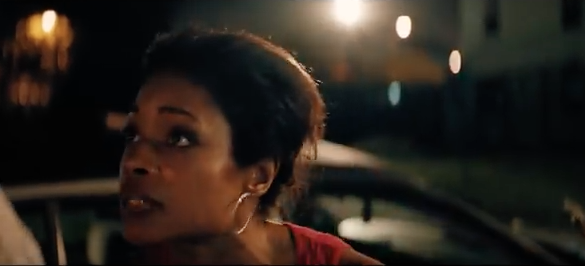

So much of “Moonlight” is centered on the idea that the lives we lead are a product of the circumstances into which we are born, and no matter how much we may try to resist or get out, we are pulled in anyway, powerless. This is illustrated by the way in which the movie comes full circle in the plight of its protagonist Chiron, underlined by the way in which the camera often circles its characters, and vigorously brought home in the scene where Chiron’s self-appointed sort of mentor and emotionally fraught mother meet in the street. She needs to buy drugs; he sells drugs; he chastises her for buying drugs when she has a son; she chastises him for selling drugs when he looks after her son; so it goes. They stand there, her growling, him grimacing, both right, both wrong, a quick, indelible re-telling of a never-ending story.


As the 2016 American Presidential Election drew nigh and then unspooled, story after story appeared in all manner of publications about small town Americans being left behind and counting on our newly elected to President to remake this country the way it was. But what was ain’t coming back, it never is and it never does, and Texas Ranger Alberto Parker (Gil Birmingham) in “Hell or High Water” coulda told you that. A Native American, he is subject to much pointed joshing from his not inconspicuous racist superior Marcus Hamilton (Jeff Bridges), most of which washes over Alberto, not because he’s indifferent but because his people have been screwed over so long, with so much of the screwing over coming so long ago that no one wants to be bothered to remember. Not that he is about to let Marcus forget. In a scene set on the corner of a four corner town across from a Texas Midlands Bank, Alberto can only shrug as Marcus laments the way of life dying all around them. “One hundred and fifty years ago,” Alberto says, “all this was my ancestors’ land. Everything you could see. Everything you saw yesterday. Until the grandparents of these folks took it. And now it’s been taken from them. Except it ain’t no army doing it.” And with that, he directs his index finger toward the bank.

“It’s those sons of bitches right there,” he says.

Friday, January 06, 2017

A Few Other Movie Shots From 2016 That I Loved

I always write a lengthy diatribe about my favorite movie shot of the year (see: yesterday) but once again I have gone one further by paying homage to (ripping off) my friend Ryan McNeil at The Matinee who annually puts up a wonderful post in which he submits a few of his favorite movie shots of the year with no additional commentary. So here are a few of my favorite movie shots of the year with no additional commentary.


Monday, November 21, 2016

Moonlight

In the opening scene of Barry Jenkins’s “Moonlight”, Juan (Mahershala Ali, alternating deftly between intimidation and benevolence), a crack dealer, pulls his car up to the curb, climbs out and crosses over to where one of his flunkies is running the street. And as the two men converse, Jenkins’s camera circles them, around and around, before re-following Juan as he strolls back to his car, pausing to let a group of kids run by. The intent of this arc shot is not to show off, or to nauseate the audience, but to connect the circular nature of the life a man like Juan, or anyone else in the neighborhood, might lead. This is brought home in maybe the movie’s most powerful scene, when Juan confronts the mother Paula (Naomie Harris) of Chiron, the meek kid Juan has taken under his wing. Juan can’t believe Paula would smoke crack when she has a son to care for; Paula can’t believe Juan would sell her crack when he acts like he cares for her son. The scene ends at an intentional impasse.


Not that “Moonlight” is strictly a parable about drugs. Far from it, in fact, as the question of whether to sell or whether to use is predominantly tied up in Chiron’s sexuality. Jenkins tells his story in three different chapters, chronicling Chiron as a pre-teen (Alex Hibbert), a teenager (Ashton Sanders), and an adult (Trevante Rhodes). In the first act he is un-graciously nicknamed “Little”, picked on for his size, though his acute shyness stems just as much from a confusion and fear about who he is underneath that diminutive height and weight. You see that emerge in a scene where he and the only kid who doesn’t pick on him, Kevin (Jaden Piner), have a bit of fun roughhousing. As Chiron lies in the grass afterwards, the camera lingers on his big eyes for a couple extra beats, cluing us into the fact that he has undergone something incontrovertible. That he has, and when the film moves into his teenage life we see this even more, even if you can simultaneously sense the character wanting to show it less.

If the bullying as a little kid centered around his size, here it centers around suspicions of his being gay, revealed immediately by classmate Terrel (Patrick Decile) chiding Chiron for needing a tampon. The character of Terrel is decidedly one note, but “Moonlight” knows that in high school you have to fit into one box all the time, and to to exist outside of that box is something akin to a figurative death sentence. Chiron knows this too. And the performance of Sanders is a marvel of agonizing restraint – as in, he fights every minute of every day to restrain what he feels and who he is. You never see this more acutely than in a late night subway ride when he leans against a window and hugs his backpack against his body, seemingly about to explode from what he’s bottling up. And then, he does explode, in the next scene with Kevin (Jharrel Jerome), still his friend, on the beach where they get high and finally give in to the bubbling infatuation that was always there even if they didn’t understand it, and don’t understand still.

This teenage passage ends, however, not with that act of passion beneath the stars, but with Kevin enlisted by Terrel to, essentially, kick Chiron’s ass. It’s part peer pressure, part confusion of who Kevin knows he is, and it ends with Chiron going not after Kevin but Terrel, and finally standing up for himself, which, in one of those aggravating paradoxes of life, is exactly what takes him down.


That is the trigger for the concluding passage, where Chiron is now an ex-con and hardened creak dealer. If we lose sight of Juan after the first passage, we don’t really, because Juan re-emerges in this form of Chiron, where Rhodes exudes the same mixture of intimidation and benevolence, an unspoken acknowledgement of how Juan, for good and bad, influenced his young charge. And if Juan carried an air of regret about his line of work, so does Chiron, where the film has circled back around to the dangling first act fate you hoped he might avoid.

Still, something like hope beckons when he gets an unexpected phone call from adult Kevin (Andre Holland), who is living in Miami, running a little diner after getting out of prison on parole. The two men meet in a sequence that is wonderfully unhurried and absolutely resistant to easy epiphanies. In their interaction, as they tip-toe around what is clearly weighing most on their minds, you begin to see and feel how this has weighed Chiron down for so long, how that one moment with Kevin and its terrible aftermath shattered his burgeoning transformation, marooning him. And if there are a great many tragedies present in “Moonlight” none is more tragic than the societal pressures that push a person to be someone they are not. And if Chiron loses his compass early in life, the end offers at least a moonlit glimmer of finally finding his way home.