' ' Cinema Romantico: Coronavirus Diaries
Showing posts with label Coronavirus Diaries. Show all posts

Friday, March 11, 2022

731 Days


March 10, 2020

March 11, 2020

March 11, 2021

July 4, 2021

November 13, 2021

November 20, 2021 - December 12, 2021

March 11, 2022

Friday, January 07, 2022

The Covid Hotel Blues

View from a COVID Hotel

There is a nun in a surgical mask walking down the street on a chilly November morning in Rome. It would be dystopian were I not already starring in a dystopia, sitting alone in the third row of a three row SUV and wearing my own surgical mask, my luggage ensconced in trash bags. There is a plastic divider separating the rear of the van from the front seat where an imposing bald man in a yellow hazmat suit is at the wheel. He never once glances in my direction, not even through the rearview mirror, like he’s frightened of me, which he probably is. After all, a few days earlier, ahead of the flight home after the long-planned vacation My Beautiful, Perspicacious Wife and I have taken to Rome, I tested positive for COVID-19. It’s the Wednesday before Thanksgiving but I’m not going home; I’m being taken to a COVID hotel at the Villa Primavera, which is less lavish than it sounds. Imagine a single-bed hospital room but with even fewer amenities. Indeed, I spend turkey day washing my underwear in the sink. 

--------------- 

When My Beautiful, Perspicacious Wife and I originally booked our Roman vacation in very early 2020, it was merely an extension of our ongoing European adventures. But by the end of 2021, after we had delayed the trip by a year for reasons requiring no explanation, it was less about adventure than escape, relief from almost two years of working from home, not going much of anywhere but from the living room to the kitchen and back again. That’s why if we toured the Colosseum, went to the Vatican and saw the Sistine Chapel, what emerged as our unofficial motto was Do as The Romans Do, like the Uber Eats dude that we saw roll up to La Gelateria Frigidarium, not grabbing a delivery but taking a timeout for his own gelato cone. I’ll never forget him, him or his Zubaz pants, an emblem of the kind of Roman life leisure that will always remain foreign to ABC (always be closing) Americans. The night before, we had dinner at a nondescript neighborhood place in Trastevere, across the Tiber, where everyone was speaking Italian, a whole family was having a feast with no qualms about keeping their gaggle of kids up past 10 PM on a Sunday, and the older couple along the wall took extensive breaks between bites, reveling in the atmosphere. My friends are always poking fun at the unhurried way I eat, but this couple, they took as long to eat as me. “Maybe I’ve always Done as the Romans Do,” I thought. “Maybe I’m home.” 

--------------- 

My Beautiful, Perspicacious Wife thankfully tests negative and flies back the Sunday before Thanksgiving as planned. Saying goodbye to her in that moment is as sad and scared as I have ever felt. True, in the last few years I have become a much more experienced international traveler and am no longer intimidated by, say, shopping at a pharmacy when I don’t speak the language. But this is something altogether different. After she leaves, I sit in the nearby wide-open space of Piazza Navona, indifferent to its remarkable beauty, masked and distanced, waiting for my hotel room to be ready so I can isolate, overwhelmed and at the mercy of the mean world, feeling my small-town Iowa-ness more than I have in a long, long time. 

--------------- 


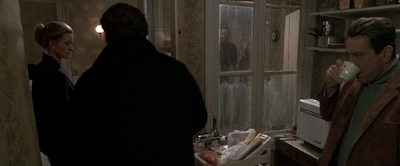
The U.S. Embassy agent advises I hunker down in a hotel and wait for the local medical authorities to contact me even as he advises the medical authorities will likely move as Romans in piazzas do – with little alacrity. Sunday passes, Monday passes, Tuesday morning passes, the Embassy assuring me they are pressuring Rome to get in touch. In Paris I made My Beautiful, Perspicacious Wife recreate a scene from my beloved “Ronin” through photographs, but in Rome I live “Ronin” out. “It would be nice to do something,” says Gregor (Stellan Skarsgård) as the crew holes up in some staid south of France flat. “We are doing something,” corrects Sam (Robert DeNiro). “We’re waiting.” I drink instant Nescafé in my hotel room and wait too. In many ways, this is the worst part, wracked from anxiety in not knowing where I’m supposed to go or what I’m supposed to do or how I’m going to get home. “Once I’m taken to my COVID Hotel,” I think, “I’ll be able to handle it.” Oops. 

--------------- 

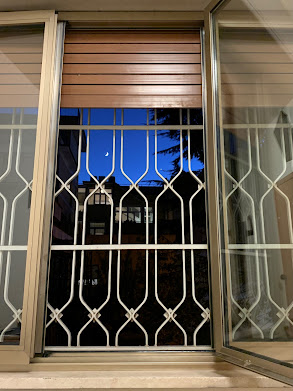
There’s another American on the floor of my COVID hotel, I realize at some point, and though I’d like to trade notes with her, I can’t, because we are expressly forbidden from leaving our rooms. The door locks from the outside, and the key is always in the door, meaning the door is always unlocked, meaning that even if I’m almost always in the room, it’s also never quite private. And for the next 17 days I am in that not-quite-private 10x13 room with bars on the window, a bed tantamount to a cot that creaks, a couple pillows essentially equaling one, a little bureau, a desk functioning as my dinner table, and a crucifix hanging on the wall over the bed because it’s Italy. Later in the week I am emailed a screener link of Paul Verhoeven’s “Benedetta”, the one about 17th-century nuns having an affair that Catholics are protesting outside Chicago’s Music Box Theater. I am desperate to watch the movie but don’t dare, afraid that if I do the crucifix will come to life. 

Vaccinated and boosted, I’m thankful to essentially be feeling fine, save for some minor head congestion, suggesting I have been tagged with the Omicron variant, news of which breaks while I’m confined. Every morning I open my Nescafé jar and breathe in the fumes of the grounds, making sure I can still smell. The Italian woman across the hall translates for me when I can’t quite communicate something to the nurses in their language and when I need a prescription filled, the process is arduous, but the minimal cost puts into ridiculous perspective American Big Pharma’s predilection for price-gouging. Meals are hospital food, albeit Italian hospital food impressively emphasizing the four food groups, but coffee, so crucial, is another matter. My first morning I ask the woman dispensing coffee for two 5 oz Dixie Cup sized cafes and she gladly obliges. The next morning, though, it’s a different woman serving and when I request “due?” she says “solo uno” (only one). My Beautiful, Perspicacious Wife keeps telling me this isn’t a prison, that if I ask for something they must give it to me. Intellectually, I know this is true, of course, but she also hasn’t seen the stern, belittling face of that woman when you ask for two cups of coffee. 

--------------- 
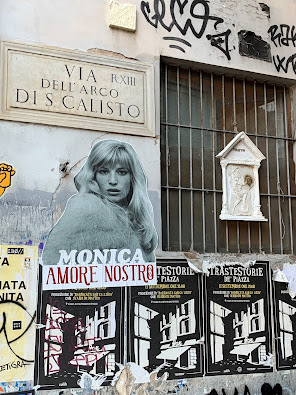
I love Monica too

My best friend theorizes I could transform this experience into my own superhero movie – you know, the montage where the main character is in isolation, whipping his or herself into shape. I have grand designs when I first arrive. I’ll sit at the desk and write, like I’m in a Paul Schrader Man at the Table movie. I’ll stare out the window at the leaves and scaffolding and wooden pallets and have deep thoughts. I’ll read more than ever before. Those dreams quickly fall by the wayside. At first, I’m shaving each morning and even gelling and combing my hair, trying to institute normalcy. I’m doing jumping jacks and knee bends and stretches. But after 9 days, when I finally get to take my test in the hopes of testing negative and getting out only to test positive, I eschew combing and gelling my hair that morning. The next morning, I forgo shaving. The following Tuesday I test positive again. It’s official: I will be quarantined the full 21 days. The jumping jacks and knee bends and stretches innately fall away. I try to start Charles Yu’s “Interior Chinatown” five times and can’t make it more than a few paragraphs. The book seems great, my mind not so much.

My second Thursday here I can’t remember if it’s Thursday or Wednesday; or maybe my second Wednesday here I can’t remember if it’s Wednesday or Thursday. Returning texts to friends nobly seeking to keep my spirits up becomes a chore. I take long naps after lunch but wake up tired, and though my boss is helpfully empathetic, telling me not to worry about work and to just get home healthy and safe, when I do think about the work waiting for me upon my return, whenever that is, I just want to go back to sleep. If I came to Rome to recharge, I have managed the exact opposite, my mind in even more disarray, my spirit even more drained. I watch a ton of year-end screeners, but none bring comfort as much as foreboding old favorites like “From Here to Eternity” and “The Third Man.” Best of all, though, I watch “L’Eclisse”, one of Antonioni’s great Italian forays into existential dread, starring the legend Monica Vitti – whose image I see a few days earlier on a wall of graffiti not far from the Basilica of Our Lady in Trastevere – in perpetual motion around Rome, searching for something, never finding it. I imagine her starring in a COVID isolation movie, prowling this room, praying to the crucifix and getting no answer, staring longingly through the window bars, the movie ending with the camera circling the room only to find she’s no longer even there, whether COVID got her or the void of existence itself left up to the viewer. 

 --------------- 
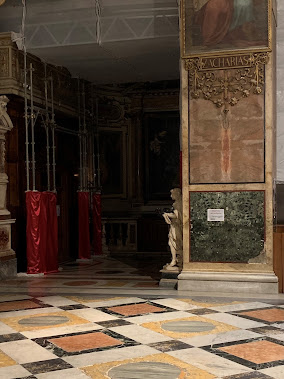
Back there, in the dark, is a Caravaggio

My Beautiful, Perspicacious Wife speculates that I got COVID in the Sistine Chapel and I like thinking of it this way. It makes sense logically, the room the most crowded one we were ever in, the warmth from the body heat palpable. But it also makes sense lyrically, the staggering beauty of the place set against the idea of it transmitting something so terrible. It suggests one of the myriad Carravaggio paintings we encounter at churches all over Rome, like his Madonna di Loreto at Sant’Agostino, how the light of the Virgin Child illuminates the dark world. The oil canvas is just tucked away in a tiny chapel, meaning if you go in the evening, as we did, you wouldn’t even see it if you didn’t know it was there. We pop a euro into a lightbox to illuminate the painting, if only for a couple minutes, a more potent metaphor, really, for 2021 than (possibly) getting COVID in The Sistine Chapel. Because if 2021 seemed poised to be so much better than 2020, especially with the miraculous vaccine’s advent, that vaccine, and so much else, did not prove to be light transcending darkness so much as a mere euro dropped in a lightbox, briefly brightening the world before everything went dark again. 

--------------- 

If My Beautiful, Perspicacious Wife and I crown every evening with a cone of gelato, we inaugurate every morning with a cup of espresso, usually at Tazza d’Oro right around the corner, and often get espresso in-between, like at Bar San Calisto, where a fashion shoot taking place right outside on the street can’t stop us. (The craft services table for this fashion shoot, I notice, has boxed pastries and a literal chocolate cake. The craft services table for an episode of “Chicago P.D.” that I happened by in October only seemed to have Slim Jims. *Americans*.) And if a single espresso might not seem like much, the ornate ceremony of the service and presentation turn a ten-second coffee into nothing less than a work of art, celebratory rather than functional. On the morning of our 10:30 AM Colosseum tour, I hit the caffè when it opens at 7:30. It’s just me and Roman cops. “I could get used to this,” I think. 

But after 17 days of a single minuscule cup of coffee each morning, a strange thing happens: I crave American coffee. I dream of a semi-burnt Venti from Starbucks; I dream of asking for that fifth refill of so-so diner coffee at Golden Nugget even though I really don’t need it; I dream of sitting on the couch with My Beautiful, Perspicacious Wife on a Saturday morning and going back for one, two, three helpings of my coffee in my giant Lady Gaga mug. When I sat on our couch for 18 months, all I could think about was drinking coffee in Rome. Now that I’m drinking coffee in Rome, all I can think about is drinking coffee on my couch. All I want is to click the heels of the Pumas I bought specifically for this trip and be magically transported home.

Friday, December 17, 2021

Blog Status Update


I just recently emerged from a draining, harrowing, and emotionally scarring experience. It has nothing to do with my personal life, let me state right up front. No, suffice it to say the Roman vacation with My, Beautiful Perspicacious Wife I had alluded to here on the blog took an unexpected turn toward the end. What kind? Well, if you consider that we remain in the middle of a pandemic, accept it or not, and if you consider that the CDC is now recommending Americans avoid travel to Italy due to COVID-19, and if you consider that I did not return home to the U.S. until, well, roughly 21 days after I was originally supposed to, perhaps you can venture a guess as to what befell me. (I’m ok, physically speaking.) It felt like a finishing blow.

I’ve been struggling; my Going On Vacation posts this year are all the proof you need. It did not seem possible at this time last year that 2021 could be worse than 2020, especially given the advent of COVID vaccination, but here we are, in a “year that both does and does not exist,” as Kyle Chayka wrote about 2021’s unplaceable vibe for The New Yorker, “a hangover from the depths of terror in 2020 that provides significant improvement and yet remains vacuous and unstable.” The invaluable culture critic Molly Lambert has a theory that we’re all suffering PTSD from the last two years and no one is dealing with it, either because, as Americans, we are obsessed with New Normals (that ignore the fallout between the previous normal and the in-between) and because we are conditioned to (or: expected to, no matter what) Always Be Closing. Rest isn’t just Sleeping; it’s something else, something more, something deeper. I thought I was going to get some in going overseas, and sort of did for a little while, until everything took a turn and now, after a year in which I felt all the while like I was approaching mental and spiritual exhaustion, find myself ground down into something like complete collapse.

I don’t want Cinema Romantico to go away. I have said this many times in the last few years. Even as blogs die all around me, I have sought to tend this garden as much for my sake as yours. But 2021 has been the hardest to get out here and till soil. That does not mean I do not still have thoughts. If my episode abroad was good for anything, it was watching year-end screeners (and existential foreign films that fit my mood). I have, like, 27 movie reviews percolating in my head. But the thought of getting them down to digital paper is just overwhelming, which is difficult to grapple with when writing has always been such a refuge.

The blog won’t be going dark but, for the time being, will have to slow way, way down, posting only when inspiration truly hits me, movie-wise or not, only when I don’t feel like I’m struggling, and hope that, maybe in the New Year, I can write my way back into this thing.

Wednesday, May 26, 2021

Going to the Movies


The Davis, the 3-screen theater in my neighborhood, opens into the lobby with a concession stand along the right wall, that lobby giving way to a hallway leading to the theaters in back. When I entered this past Sunday, for the first time in 17 months, since early 2020, having just fastened my mask to my face outside to observe the theater’s rule, I paused for a moment. The lobby has been mostly empty before, like the 100+ degree afternoon when I went to see that wretched Tom Cruise “Mummy” remake, but even then there was activity, the familiar sound of popcorn popping and concessionists cracking wise. This was different. It was eerily quiet. There was music but it was distant, being piped in through an open door from the adjacent Carbon Arc Bar, meaning the lobby felt a little like some dying mall’s atrium, a comparison so depressing I immediately put it out of my mind. The only other person was a single concessionist. As I entered, he stepped forward to his cash register, though he was masked too, of course, and, as such, I could not quite tell if his expression was eagerness, to serve someone, anyone, or apprehensiveness, from the whole situation. If I was a journalist, maybe I would have hashed things out with him, but this is just a dumb blog and I was just there to see a movie so I continued past him to the doorman in back where he printed out the ticket I pre-purchased. Though the doorman was masked too, his demeanor was easier to place, helped along by one Apple earbud in his right ear, treating the pandemic like he probably treated college applications, with a virtual shrug. It wasn’t Normalcy, per se, but it was momentarily refreshing, and it made me wonder how I, ex-movie theater employee from the era of 35mm film would have handled working in a pandemic. I probably would have been more like the concessionist, I thought. I would have been ready to help, quietly hoping I wouldn’t have to.
To my recollection, the Davis never had those earsplitting AMC-ish pre-movie ads, though maybe in the last year I had just forgotten, and when I entered Theater 3 for my 3:30 showing of “Those Who Wish Me Dead”, I was momentarily taken aback by the cacophonous advertisement for some TV show I’ve already forgotten. On the other hand, there was something comforting in the din of noise. “Ah yes,” I thought to myself as I plunked down in my seat, in the section closer to the screen, all by myself and away from the five other patrons, further up the stadium seating and toward the back, “this is what the movie theater sounds like.” Everything sounded so clear: the rustle of popcorn bags, the chewing of the popcorn itself, the whispers between the couple during one of the trailers, the soda cup hitting the floor which brought a smile to my face. It felt right. The trailers screened and the lights came down.

I had anticipated some moment of profundity when those lights went down, but it didn’t come until a few scenes in, when Angelina Jolie, as a smoke jumper, the magic of the movies in full effect, holds a red solo cup, holds court and holds the camera’s in a spectacular medium close-up where she is wearing Ray-Bans and smiling that cool, in-control Jolie smile. “This,” I thought, “this is why I’m here.” Not to see a movie over there, on the TV, or down there, on my laptop, but up there, on the big screen, where people like her belong. And if I had dreamed that Maverick’s return in the “Top Gun” sequel might mark my triumphant post-pandemic return to the theater, I knew seeing Jolie in Maverick-like Ray-Bans that the cosmos was communicating to me, telling me, nope, it was supposed to be like this all along. 


I’m reasonably certain I could have extracted a metaphor from any movie that was the first one I’d seen in a theater in 490 days. But hey, you only get one movie as your first movie back in the wake of the first global pandemic of your life and “Those Who Wish Me Dead” was mine. And here was a movie where the characters go through hell, forced to face down a raging forest fire and come out the other side. I was lucky, pandemic-wise. No one in my direct orbit died, few people close to me suffered in any real way, the pandemic isn’t even over in many parts of the world. But seeing Angelina Jolie smile that Movie Star smile, caked in Just-Survived-A-Forest-Fire Movie Makeup, it got to me nonetheless. Because of the movie and because of her, how she sells it, yes, but because of the whole world too. Typically I come to the theater to get rid of my troubles for a little while, and I did, but I was also here because those troubles had lessened a little. 

I left the theater and stepped out on the sidewalk. The temperature had dropped. I took my mask off, breathed in the cool air and walked home.

Monday, May 10, 2021

What Movie Will Mark My Triumphant Return to the Theater?

A couple weeks ago I received my second dose of the Pfizer vaccine, modern miracle, officially making me a Fully Vaccinated Man. And though I recognize the Pandemic is not over - indeed, it seems only to be growing worse in certain parts of the world - I also felt joy at certain activities I once took for foolish granted being cautiously available to me and My Beautiful, Perspicacious Wife (also fully vaccinated) once again. It is why my idea of a post-vaccine celebration is not posting a picture of my precious vaccine card but finally, quasi-officially answering the question that has dogged my mind for well over a year: what movie will mark my triumphant return to the theater?


I had an answer to this question, of course. I mean, at one point it wasn’t even a question at all. “Top Gun.” I was going to go see the “Top Gun” sequel, “Maverick”, slated to open over the July 4th weekend. Oh, how many times I dreamed of that moment! Alas, Tom Cruise, hero of the movie, I presume, made like a villain, pushing the release date back to November so he could go on worldwide tour for its release. Sigh. And yet. I’ve come to suspect that “Top Gun: Maverick” might not have been the wisest choice for my triumphant return to the theater if only because between nostalgia and being in a movie theater for the first time in 16 months, I likely would have been reduced to a cacophonous blubbering mess when that Harold Faltermeyer score (I can only assume) kicked in. The ushers probably would have been forced to intervene. “Sir, we’re going to have to ask you to leave. Your crying, it’s just too darn loud.” 

With “Top Gun: Maverick” out, I’m unsure where to turn as nothing else calls out to me so clearly. And while there is an argument to be made that my triumphant return to the theater should be nothing more than waking up one morning, deciding to go see a movie, seeing what’s playing nearby, and picking something out , well, how do you make a blog post out of that?

What Movie Will Mark My Triumphant Return to the Theater? 


Moonfall. Roland Emmerich is making a movie about stopping the moon from crashing into the earth? Well, okay then, this was easy. It’s all settled. I’m going to see “Moonfall!” Wait, what’s that? “Moonfall” doesn’t open until 2022? Criminy ditch. On with the list.


The Woman in the Window. This is a Saturday Afternoon TNT Movie. Next.


Samaritan. “...the project has been described as a dark, new take on superhero movies.” Oh my God. I really don’t need any more of this in my life. Next. 


F9. This one isn’t my speed. Next.


Wrath of Man. If F9 isn’t my speed than shouldn’t a middling thriller be my cup of tea? Eh, yes, but the stakes here are huge. This is my triumphant return to the theater! It has to be the right middling thriller. This is wrong. Next. 


The Dry. Oooooooh. Now this middling thriller seems a bit more like my cup of tea. And yet I can’t help but be more intrigued by another middling thriller.


Army of the Dead. This middling thriller. “After a zombie outbreak in Las Vegas, a group of mercenaries takes the ultimate gamble by venturing into the quarantine zone for the greatest heist ever.” I mean, the glorious Pitch Meeting-ness of that synopsis (it’s a heist movie crossed with a zombie movie!) moves it into serious contention. But, it’s Zack Snyder. And Snyder’s aesthetic is too Netflix-y for such a moment. Next.


Limbo. The thing is, I really want to see “Limbo”, maybe more than any movie on this list. It’s just, it doesn’t scream EVENT. And while there is some of that “Sideways”-ish argument about going to see the movie for the first time in 16 months itself being the EVENT, I’m still looking for a more of a sense of imaginary red carpets and searchlights. Next.


Here Today. I love the idea here. I want more of these movies, where rather than emphasizing the IP, you’re emphasizing the actor, taking Tiffany Haddish and figuring out the rest later. But this still feels more like, say, a third movie back than a first movie back. Next.


A Quiet Place Part II. Emily Blunt facial expressions are one of the best parts about the movies, granted, but I just don’t have enough attachment to this burgeoning series to choose it for such a momentous occasion. Next.


Jungle Cruise. If it seems ridiculous to rule out “A Quiet Place II” and then give greater consideration to “Jungle Cruise”, which I suspect is going to become 'problematic', but what can I tell you? Loyal frustrated followers know I want to see “Jungle Cruise”! Don’t judge me! If I want to see Emily Blunt be a Movie Star, not an Actor, let me! But. This isn’t being released until July 30th. That’s too far away. Next.


In the Heights. Lin-Manuel Miranda’s big movie musical certainly feels like an EVENT if nevertheless missing one key ingredient. ...


Those Who Wish Me Dead. ... This ingredient. Because regardless of what anyone else thinks, calling up their box office receipts and dumbed-down elementary definitions of the term, Angelina Jolie is a Movie Star. And a movie where Angie is playing a smoke jumper being pursued by assassins, that scratches the maddening itch of the last 16 months. Besides, while being released into the theaters, it is simultaneously being released on to HBO Max. That means I am consciously choosing not to see a movie on the small screen and that feels momentous. 

See you [wipes away tear] at the movies. 

*An earlier version of this post conflated the forthcoming In the Heights with the forthcoming West Side Story, or perhaps conflated the forthcoming West Side Story with the forthcoming In the Heights, I honestly don’t know. Every movie looks the same to me anymore. The blog regrets the error.

Thursday, March 11, 2021

366 Days


March 10, 2020

March 11, 2020

March 11, 2021


Wednesday, February 24, 2021

Ray of Light

Last year, on this very blog, I deemed Alfre Woodard in “Clemency” as perhaps the best movie drunk I have ever seen. I stand by that, though in recently re-watching “The Philadelphia Story” I was reminded that if there is a close second, a worthy challenger, if not a usurper, at least from a different angle, it is Jimmy Stewart. It happens midway through George Cukor’s 1940 classic, the night before Tracy Lord (Katharine Hepburn) is to be married to What’s-His-Face, the guy who doesn’t stand a chance, destined to lose out to C.K. Dexter Haven (Cary Grant). Before that happens, though, spurring it along, in fact, Mike Connor (Stewart), the reporter tasked with concocting a story out of this whole marriage, deeply suspicious of the rich & famous, gets drunk and seeks out C.K. to hash out his feelings.


Mike Connor: “Are you still in love with her? Or perhaps you consider that to be a very personal question. Liz thinks you are! Liz thinks you are.” 

The wag of the finger up there, that’s Mike decreeing “Liz thinks you are!”, truly honoring that exclamation point, like he’s caught C.K. red-handed. But then instantly, Stewart downshifts, bringing his own disappointment about that development to the surface, almost seeming to say the second “Liz thinks you are” to himself.  

Mike Connor: “Although of course women like to roman..romanticize things a bit.”

The ellipsis denotes a drunken hiccup, which in the hands of most mortals would have been a stagy affectation but as emitted by Stewart really sounds like the bubbly just expanded his stomach. 

C.K. Dexter Haven: “Yes, they do, don’t they?”
Mike Connor: “Yes they do, don't they.”

The rhythm Stewart hits on repeating C.K.’s line is verbatim is perfect. I have a friend, who shall remain nameless to protect the innocent, who I’ve heard, when inebriated, do a version of that and, man, Stewart’s version is dead-on. I mean, dead-on. Granted, Stewart gets the perfect scene partner here in Grant, playing the tee-totaler to perfection with that kind of bemused air you get when suddenly confronted with a drunk person less menacing or violent than comical and a little too unaware of personal space. But Stewart is not just playing drunk to be funny.

If Woodard’s drunkenness in “Clemency” quietly gave away how her prison ward character was holding by the slightest of threads, in drunkenly pressing C.K. on his feelings about this ex-wife, the scene itself finds Mike admitting his brewing infatuation with Tracy. Science may be skeptical of drunkenness as a truth serum but this isn’t science, this is art, and Stewart’s intoxication really does seem to yield unwitting authenticity. 

Thursday, February 11, 2021

Ray of Light

Anheuser-Busch ran an advertisement during this past Sunday’s Super Bowl regathering the ostensible legends of so many Bud Light ads past. Watching it made me think about how Super Bowl commercials used to be so much better, a trite thought, truth be told, where it simply seems as if things used to better when framed through cozy nostalgia, unless you extract that sentimentality and look at it with clear eyes to discover it was more or less, give or take, all about the same. Still, as I thought about this, I was compelled to remember what I have always cited as my favorite Super Bowl commercial, a Leslie Nielsen spot for Coors Light in which he wore pink fuzzy slippers.

Because the Pandemic has broken me to the point where old advertisements instill a sense of longing, and because this is the modern age, I sought out that ad on YouTube. I found other Nielsen commercials, like this one, and I found one where Nielsen parodied the Energizer Bunny, that relentless 90s symbol of commerce, but not one where Nielsen was wearing fuzzy pink slippers. I began to suspect that my memory, as it so often is, was faulty. Had I conflated the Energizer Bunny spoof with the scene in “The Naked Gun 33 1/3” where Nielsen wears fuzzy slippers? Ah, but just when I thought I had made it all up, I found it, quite by accident.


Well, what do you think? Is that the best Super Bowl commercial of all time? Eh, I have my doubts. No one, I suspect, is putting that up against Mean Joe Greene, never mind Apple’s renowned 1984 spot, and yet. I had forgotten Nielsen’s ad came at the dawn of the 90s, citing the Silver Bullet as the one that won’t slow you down, “perfect for the fast-paced 90s.” Boy, that’s a time capsule. That is how the 90s felt, isn’t it, on the cusp of them, like you were segueing from the go-go 80s to something no doubt even swifter. Of course, you don’t need me to tell you, person reading this on your phone (!), that life has accelerated incalculably from there to a tempo that would leave 1990 Me clinging to the side of my vintage wood-paneled television set like I was on a boat in a storm. Which brings me back to Nielsen and his pink fuzzy slippers.

A couple days after the Super Bowl, the film critic Justine Peres Smith Tweeted that she was “Trying to imagine living in a world where you would physically go to and from work and when you were not physically at work, the only way they could contact you was to a call a telephone tethered to a specific place.” I virtually raised my hand. “I lived in that world,” I thought. “Once, long ago.” Say one thing mean about the wheels of technological process these days and you are branded a Luddite, of course, but while we have gained much, we have a lost a lot too. That 1984 Apple ad saw the coming benefit of smaller computers, though perhaps it did not foresee (or perhaps it did) a “world in which billions of people stare at their own screens even while walking, driving, eating, in the company of friends and family — all of them eternally elsewhere,” as Rebecca Solnit put it for Harper’s, rendering them “trackable at all times...savage privacy, break down journalism as we know it, and create elaborate justifications for never paying artists or writers.”

At first glance, the Coors Light commercial would appear to have no such vision. And yet, in its small-scale aesthetic of a guy, a chair, a curtain, a beer sign, and slippers, it does not epitomize the fast-paced 90s so much as Coors Light’s current slogan about being Made to Chill. It is almost as if Leslie Nielsen had seen the future and, contradictory to Coors Light claiming it was the beer that wouldn’t slow you down, was telling us to take it easy, for God’s sake, while we still had time.

I changed my mind. This remains the singular Super Bowl commercial.

Monday, January 25, 2021

Ray of Light

The legendary Sports Illustrated scribe Dr. Z, née Paul Zimmerman, who died in 2018 at the age of 86, timed every rendition of The Star-Spangled Banner he heard. He wrote about this unique predilection in a piece, near as I can tell, since scrubbed from the Internet, though I remember the gist of it quite well, how the song, ‘To Anacreon in Heaven’, on which Francis Scott Key based his future National Anthem was a British pub tune in waltz time, a little ditty intended to be belted out quickly over a few drinks, not a marching band power ballad meant to herald flyovers. If the pre-game singing of a Star-Spangled Banner stretched longer than a minute, Z’s thinking went, you might be honoring America, albeit in over-inflated fashion, but not the song. So he clocked them all, searching for the 60-second versions, which were not entirely elusive but hard to come by nonetheless, too many destined to die on what he deemed Heartbreak Hill, the last two lines, when people threaten to extend that O say does that star-spangled banner yet wave into forever. If to some Whitney Houston’s Star-Spangled Banner before the 1991 Super Bowl was the greatest, to Dr. Z it was two-minutes plus. Nein. 

I have always sided with Z’s interpretation. I have a written a variation of this before but the stiff pageantry, not to the mention the patriotically correct add-ons (put your hand over your heart or else), frequently leave me feeling more distant from America than close to it. I do not mean to begrudge anyone for whom the Anthem culls genuine emotion. I feel it sometimes too, though generally from the circumstances, like an Olympian on the podium, rather than the song itself or the performance of it. The Star-Spangled Banner, as many more qualified to know than me have explained, is not inherently much of a song (Z noted The Battle Hymn of the Republic puts it away) and notoriously difficult to sing. Singing along to it, in fact, reminds me of my Lutheran pastor once instructing my confirmation class to recite the Lord’s Prayer, not with any feeling, just to prove we knew the words, which flashed me back to so many pre-class recitations of the Pledge of Allegiance and renditions of The Star-Spangled Banner before I-Cub games when my mind was anywhere else. Too often we sing the words without hearing them, a ceremonial formality, little else.


If, however, as Amanda Petrusich has argued for The New Yorker, the standardized Star-Spangled banner has made it sort of sacrilege to monkey with, what Lady Gaga did with the Anthem at President Joe Biden’s Inauguration last Wednesday was not reimagine it so much as refocus it. Like Bruce Springsteen seeing “When the Saints Go Marching In” not as joyful exultation but an apocalyptic hymn in the wake of Hurricane Katrina, or, more obscurely, how Jim O’Rourke heard something different and clear as a bell in mixing Wilco’s “I’m Trying to Break Your Heart” into a masterpiece, Lady Gaga saw The Star-Spangled Banner’s middle, not Heartbreak Hill, as the crux.

As The Washington Post’s Chris Richards notes, Key’s anthem contains a question, wondering if the American flag will still be there at Fort McHenry on September 14, 1814 after a night’s bombardment. Lady Gaga’s version of the song honored that question, filtering through the prism of what had transpired two weeks earlier at the very same place, the U.S. Capitol, where she was standing. (The War of 1812, really, was no less stupid than what transpired on January 6, 2021.) “Just as she sang, ‘But our flag was still there,’” Stephanie Zacharek wrote of the rendition’s crucial moment, “she turned and, astonishingly, with a sweep of the arm straight out of Puccini or Verdi or Bizet, directed our attention to the actual flag. Her intent wasn’t just a subtext. It was a shout of jubilation and defiance. After all of this, our flag is still there!” In that single sweep of her arm, Gaga bridged the gap of 207 years, drew on both the surrounding context and the words of the song, melding them as one, lifting it up beyond compulsory pageantry to give it a pulse. The end, then, became not the bombastic culmination, leaving space for imaginary F-16s, but the emphatic benediction.

I don’t know what Dr. Z would have thought about Lady Gaga’s National Anthem. Maybe he would have just thought: it ran 1:45. Or maybe he would have put the stopwatch down because occasionally, rarely, even a Star-Spangled Banner can transcend time.

Tuesday, January 19, 2021

Marking a Miserable Milestone


Once, years ago, not long after 2003 I’d reckon for reasons about to become clear, my friend Nicolle asked me if I had seen the Chris Rock political comedy “Head of State” (2003). “Have I seen it?” I asked incredulously. “I saw it with you!” I replied, also incredulously. “At the Wynnsong 16!” Being able to remember where I have seen every movie since I started going to them on the regular is, along with being able to name every U.S. capital and every Nebraska football starter since 1985, my superpower.

I saw “Groundhog Day” with my whole family at the Westwood 6 in West Des Moines, the same theater where in the same year I saw “Cool Runnings”, for free, summoned past the line and over the velvet rope by an usher who was the older brother of one of my friends, my own personal Copacabana moment. 

I saw “The Family Stone” at the Esquire in Chicago not long before it closed and saw “The Merry Gentleman” (twice!) at Piper’s Alley before it, too, shuttered. I saw “Spotlight” and “Brooklyn” on the same day with a break for donuts and coffee in-between with My Beautiful, Perspicacious Wife at the Landmark Century which is an afternoon/early evening I have frequently dreamed about for the last year. I saw “Atonement” at the River East on Friday, saw “The Golden Compass” (Kidman!) at Webster Place on Saturday, wondering the whole time why I had not just a bought another ticket for “Atonement” instead, and then went and saw “Atonement” again at the Landmark Century on Sunday.

I saw “Ocean’s Twelve” with my best friend at the Ziegfeld in Manhattan and I saw “House of Flying Daggers” with my best friend and his future wife at some chain theater in Manhattan I admit I can’t name, though I do remember going up, like, 14 escalators, because even when I’m on vacation I still want to go to the movies.

Cities I have only briefly lived in I remember at least in part through where I saw movies. I saw “Cast Away” at the Shea 14 in Scottsdale, Arizona and “The Dish” too, which was my favorite movie-going experience in the Valley of the Sun, and “You Can Count on Me” and “Memento” at the Camelview 5 which was the one place in that sprawling suburb of a city housing anything independent. I saw “Scream 2” and “Starship Troopers” at the Campus III in Iowa City’s Capitol Mall, running into a dude in my rhetoric class at the former who was buying a ticket for “For Richer or Poorer” which prompted me to silently judge him on the spot, and “L.A. Confidential” and “Amistad” at the Englert (since transformed into a concert hall), the latter with a girl on what might or might not have been a date, I still don’t know.

I saw “Revenge of the Sith” at the previously mentioned Wynnsong 16 after a friend’s wedding, a reminder of a time when I could still stay up all night and still go to a movie the next day, and when I’d buy a newspaper, sprawl the movie times out in front of me on the kitchen table like an army general gleefully studying battle maps. Remember that? Remember just thinking, “Hmmmm, maybe I should see a movie today” and then figuring what’s playing and what you want to see and just, like, going? Remember that? [Sighs deeply.]

That “Star Wars” shout-out is not incidental. Three hundred and sixty-five days ago I went to the ArcLight and saw “The Rise of Skywalker” (bleh). That is to say, it has now, as of today, January 19, 2021, been exactly one year since I have gone to a movie.

I really want to go to a movie.

Wednesday, January 13, 2021

Ray of Light

The 2021 Golden Globes were not canceled, merely rescheduled for late February, much like the 2021 Academy Awards were rescheduled for late April. I know, as a Very Serious Critic™ I am legally mandated to issue a complaint about the fraudulent Globes and their celebrity obsessed governing body, the Hollywood Foreign Press Association (HFPA), but, as I have said so many times before, I can’t bring myself to complain about an event as transitory as Hollywood’s Office Christmas Party. I can walk and chew gum at the same time; I can evaluate art and appreciate Emma Thompson walking onstage at the Beverly Hilton with her heels in one hand and a martini in the other. And boy, I missed the Globes this year, given how recently they have always fallen right at the end of the worst week of the year, the one after New Year’s, this little bright spot in a room where the Christmas tree no longer stands and everything seems so vast and helpless. I wanted to imagine what Meryl Streep and Eddie Murphy were talking about between commercials; I wanted those weird little moments you only get at the Globes.

Weird moments like the 1998 Globes, an all-timer, when Ving Rhames gave his Golden Globe to Jack Lemmon just because he was Jack Lemmon, which seemed to deftly toe the line between both truly honoring Lemmon in Rhames’s own strange way and commentary on how getting a Globe in the first place doesn’t mean all that much, and Christine Lahti being in the bathroom when she won Best Lead Actress in a Dramatic TV Series. That last one is mentioned a lot. Less frequently mentioned is the 2010 Golden Globes when country western singer/songwriter Ryan Bingham missed winning Best Original Song for “The Weary Kind” in “Crazy Heart.” Bingham, however, was not in the bathroom; he was at the bar, getting some beers to bring back to his table. 

It has been a trying, terrible 10 months. And yet even as the pandemic continues to rage and American democracy teeters, as our psyches splinter and we are put on edge day after day, we are being tasked with maintaining the machines of capitalism like everything is normal, which merely doubles our pre-existing exhaustion, as Anne Helen Peterson wrote, if not quite in those words, smashingly, though sadly, on the recent nadir of America’s productivity obsession. I am not asking for us not to be vigilant, and I would like to think everybody here knows that, I am just asking for us to bring more of that Ryan Bingham being at the bar when his Golden Globes win was announced kind of energy, to eschew compulsion for nothing but the result, to allow space to switch off and recuperate, to say: give me a goddam minute. 

Tuesday, December 22, 2020

Top 10 Movies of 2020: Specifically 2020 Edition

It’s the end of the year and that means end of the year lists. Of course, this is the end of 2020 which, it goes without saying, though I’ll say it anyway, was a weird, miserable year. Many of the movies that were supposed to be released in 2020 had their release dates moved to next year. Movie theaters were shuttered across the country, some indefinitely, some permanently. What strange, new, possibly bleak future awaits the entire industry is subject to whenever we manage to extricate ourselves from this unrelenting pandemic. I watched 2020 movies, sure, many of them, if not as many of them as I would have in any other year. I liked some of them a lot. But now, as my inbox is flooded with year-end screeners, I feel, frankly speaking, burned out on streaming and just burned out in general, less inclined to watch new movies than ever. A typical year end list through this lens feels not so much impossible as something closer to a lie, not the kind of list to match the mood. Perhaps if this was another blog, another publication, subjected to an editor’s exacting standards, we’d have to play by the hoary rules. As it is, this blog answers to no one but itself. Here, in alphabetical order, are the best movies I watched in 2020. 

Top 10 Movies of 2020: Specifically 2020 Edition

The August Virgin (2020)

In evoking the languid atmosphere of a few hot August weeks in Madrid, director Jonás Trueba, who co-wrote with his star Itsaso Arana, equates Finding Yourself with an earthly miracle. 

Bloody Nose, Empty Pockets (2020)

The Ross Brothers’ not-really-a-documentary documentary reimagines the edge of the earth of ancient times as the last 24 hours of a Las Vegas dive bar, or something. 

Dark Waters (2019)

I want more Diane Lane Goes To Pretty Places movies, certainly, I have not been shy in professing that, but do you know what I really want? I really want more movies like “Dark Waters,” pop filmmaking with a serious auteurist bent. 

The Edge of Democracy (2019)

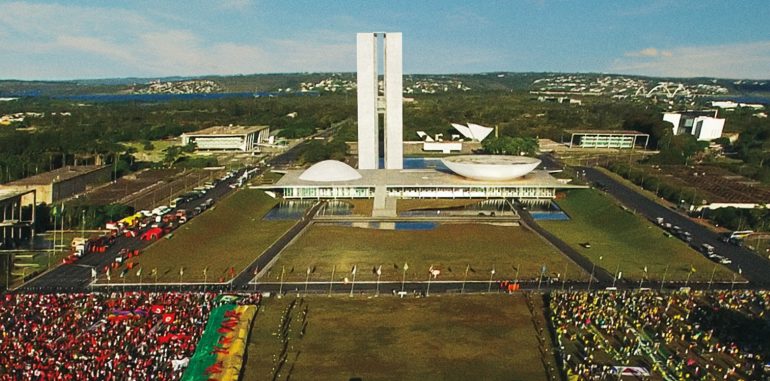
Less a documentary, really, than a personal essay, Petra Costa brilliantly, sorrowfully suggests democracy is less a system of government by the whole population or all the eligible members of a state, typically through elected representatives, than an impossible dream always waiting to come true. 

Infinite Disco (2020)

Let’s be real, I was probably never happier all 2020 than I was during Kylie Minogue’s livestream concert in early November to promote her new album “Disco.” 

Last of the Mohicans (1992)

In my single experience, your favorite movie just pops that much more during a pandemic. 

Monterey Pop (1968)

With live music effectively canceled in 2020, I rejoiced in going back to Monterey Pop. Turns out Janis Joplin singing “Ball & Chain” was the prototype for Ally singing “Shallow.” 

Roman Holiday (1953)

Entertaining and affecting, affecting and entertaining, two Movie Stars acting and two actors being Movie Stars, director William Wyler utilizing an impeccably crafted screenplay by Dalton Trumbo, Ian McLellan Hunter and John Dighton to visually tell the story, yeah, I’m pretty sure “Roman Holiday” is the perfect movie.

Tokyo Olympiad (1965)

I’ll think about the Olympian eating a sandwich at the Olympics during his Olympic event for the rest of my life.

The Vast of the Night (2020)

Evokes the simultaneous terror and wonder in simply listening and looking up.

Wednesday, November 25, 2020

Ray of Light


My Beautiful, Perspicacious Wife showed me “Funny Face” for the first time last week. I retain the right to review the movie in full at some point in the future, though I will say it does not completely work, significantly falling off in the second half, partially undone by the fact that despite its two legendary lead performers they simply have no romantic chemistry whatsoever, proof positive that the greats can’t fake it. Not that such critiques matter. The stuff here that’s good is so good it’ll melt your face off, stuff like the “Funny Face” scene itself, though not the actual number, not quite, more the moment just before Audrey Hepburn as the bookish Jo Stockton begins singing with the debonair photographer Dick Avery (Fred Astaire).

Standing in the latter’s dark room, Jo leans against the wall and sighs “How could I be a model,” one of those immaculate, peerless Hepburn line readings where she stretches out the first syllable on the last word, rendering it “moooodel”, like it’s some distant phrase she’s trying to sound out. “I have no illusions about my looks,” she continues. “I think my face is funny.” Her face is not really funny, of course, duh. In fact, the funniest thing in the whole movie (and I mean that as a compliment) is that she says this while the movie literally frames her like the Movie Star she is. 

Heavens to murgatroyd. 

Monday, November 02, 2020

Ray of Light Black Cloud

Saturday Night Live, 10/8/1988  Tom Hanks as Peter Jennings, Phil Hartman as David Brinkley


Peter Jennings: “Well, David, throughout your career, you’ve been known for your cynicism, but certainly you haven’t lost that much faith in the presidency.”

David Brinkley: “Well, Peter, as I get older, I find I’ve lost faith in a good many things – country, family, religion, the love of a man for a woman. I’ve reached a point where it’s struggle to get up in the morning, to continue to plod through a dreary, nasty, brutal life of terrible desperation at the end of which we’re all just food for maggots.”

Peter Jennings: “Food for maggots, indeed.”

Thursday, October 29, 2020

What the Constitution Means to Me

“What the Constitution Means to Me”, first produced in 2017 before moving to Berkeley Rep and then Off-Broadway and then finally to Broadway where it was filmed late in its run by director Marielle Heller, is based on the experiences of playwright and primary performer Heidi Schreck competing as a teenager in constitutional debates at various American Legion Halls around the country. As the play opens, Schreck, decked out in a yellow blazer, asks the audience to imagine her as a 15-year old girl just as she asks the audience to imagine themselves as men since Legionnaires were men-only. If it’s funny, in a broad kind of way, asking women and people of color to imagine themselves as old white dudes, it also speaks to the play’s duality, brought home in Schreck outlining the spoken and unspoken societal restrictions so frequently forcing so many Americans to be two different people. This painful reality, Schreck outlines, could have been prevented by the Constitution. But if our founding document installed certain freedoms by stipulating what the government cannot restrict, it also forewent stipulating certain freedoms that a government could (should?) provide, while fuzzy 18th century writing frequently left these matters open to interpretation, providing a lane for much modern legalese to leave so many, typically women and minorities, out in the cold. (There is an astonishing moment when Schreck simply plays the audio of Justice Stephen Breyer and the Originalist Flimflam Man, late Justice Antonin Scalia, arguing about the meaning of “shall” in reference to the 2005 case Castle Rock v Gonzales which renders these ostensible legal giants as nothing more than Slick Willie debating the definition of “is.”) 

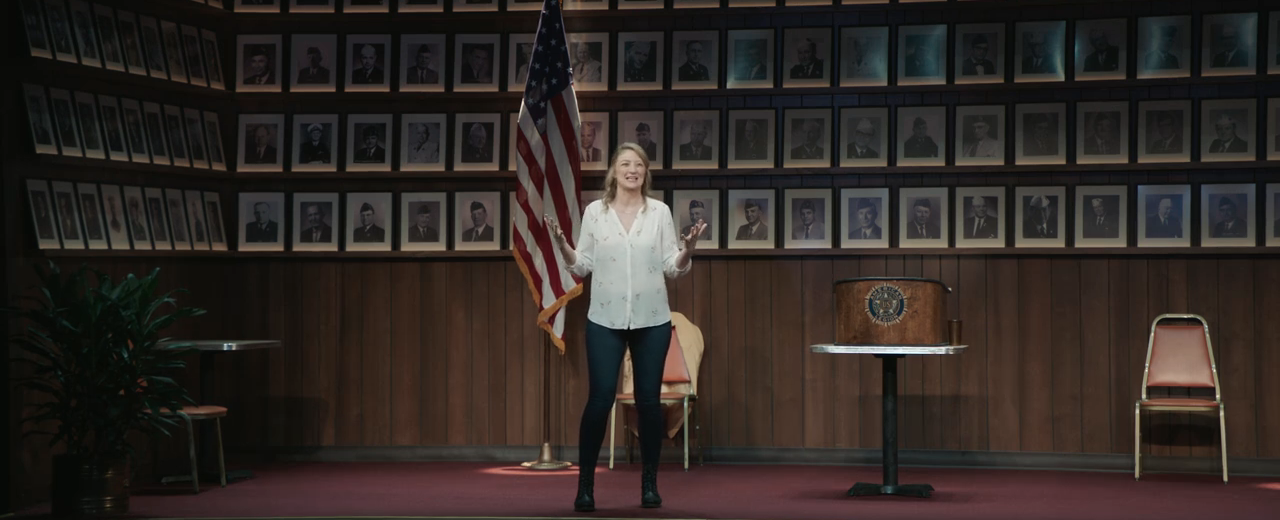
Initially Schreck recreates one of her scholastic debates, the stage set up to look like the Legion Hall in her Washington state hometown, with framed photos of men in American legion caps surrounding her on the wood-paneled walls while a Legionnaire (Mike Iveson) issues debate instructions from a seat to her left. If at first Schreck assumes the overzealous air of a youthful debater, her smile epitomizing a tendency toward what she later deems psychotic politeness, the way she frequently leaves space after punchlines allows the concurrent melancholia in these punchlines to then quietly creep in. And if she admits the personalized argument portion of the debate was always difficult for her, eventually the lights dim and she discards her yellow blazer, leaving her 15-year old self behind, truly defining what the constitution means to her by melding her own life story with the stories of other women as she gradually, gracefully invites everyone into the show.

If the Legionnaire spends most of the show as an unsmiling presence, midway through “What the Constitution Means to Me” Schreck cedes the stage to him as he stands up, sheds the character’s uniform and tells his own life story. If that story is predominantly about coming out, however, the details mirror the hostility and intimidating air of violence as the experiences described by Schreck. And just when the play seems about to conclude, Schreck upends everything by converting “What the Constitution Means to Me” into a literal constitutional debate by bringing a teenage debater (Rosdely Ciprian) onstage to have an exchange of views on whether the Constitution should be abolished and remade from scratch or reimagined through the existing framework. And then Schreck brings the audience into the debate, not simply by having them express approval for their preferred argument but by choosing one member of the collective to decide which debater wins. 

I thought about this ending because throughout the filmed version of the play I kept wondering why Heller kept cutting to shots of the audience, like it was an HBO comedy special as opposed to a work of art unto itself. But, of course, Heller was laying the groundwork for this finish, ensuring we grasped, subconsciously or otherwise, the play was as much about them – us – as it was about her. And if I loved “What the Constitution Means to Me”, the structure, the performance (Schreck is exceptional at being rehearsed when she should seem rehearsed and spontaneous when she should seem spontaneous), the righteous anger that she lets bubble over even while marshaling comprehensive, composed arguments, I loved Heller’s direction too, subtly providing its own point of view that instead of subsuming Schreck’s enhances it. 


Throughout the play’s early scenes, as Schreck reimagines one of her scholastic debates, the camera continually catches at the end of sentences and in the middle of sentences glancing toward the Legionnaire because she knows she’s on a debate clock. But as the play moves out of this reimagination and into her personal history, she still keeps glancing leftward, an incessant reminder of women live looking over their shoulder, the proximity of Heller’s camera for these looks bringing them to agonizing life.


And Heller favors low angle shots throughout that seem to make those American Legion photos stretch on into forever.


Best of all, though, is a moment after Mike has deliberately broken, leaving the Legionnaire behind, told his story and sat back down. After he does, Schreck advises the audience that if they have not already done so, this would be a good time to once again to proceed as being who they are and stop imagining themselves as men.


After she does, the camera scans the crowd, letting that idea sink in. 


“You are welcome,” she reiterates, “to be yourself.” At which point she pauses, for just a second, and then smiles at Mike, transforming one of those little leftward looks mentioned above into something else entirely. 


And Mike smiles back, a shared moment of kindness. 


Rather than return directly to the play, however, Heller cuts to a shot behind Schreck, looking out into the darkness of the theater, lingering there for a just second. Because if this scene, just like the play itself, argues that we have the ability with words and amendments to make innate America as a sanctuary, a place fundamentally required to take care of its own, that idea, somehow, remains up for debate.