' ' Cinema Romantico: Hell or High Water
Showing posts with label Hell or High Water. Show all posts

Monday, February 20, 2017

Countdown to the Oscars: 5 Moments That Made the Movies in 2016


Is there anything more noxious than corporate team-building exercises, attempts by synergy shamans with powerpoint presentations and comprehensive handouts at the behest of higher-ups who do not care in any way, shape or form about who their underlings really are to force those underlings to forge some sort of faux-bond that could be severed at a moment’s notice since everyone - who are you again? - is expendable anyway. Ugh. In “Toni Erdmann”, however, which spends much of its considerable running time deconstructing and skewering the impersonality and inanity of corporate culture, the team-building exercise gets viciously, hilariously sent up, melding management training with an “Eyes Wide Shut”-style soiree which is gloriously WTF? as it sounds, finally, at long last, making “adaptability”, “problem solving” and “trust building” count for something real.


Pablo Larraín’s “Jackie” is based on a real person – that is, Jackie Kennedy, Mrs. John F. Kennedy, First Lady of the United States. But it is also very much not about a real person, more about a myth, the one she shrewdly sculpts to preserve her husband’s legacy in the immediate aftermath of his terrible death, but also her own myth, which we see her shaping during and after. You see this in the movie’s most incredible shot, during the famous funeral procession, which becomes not a march to the cathedral but to Camelot, which Larraín sets at a low angle, looking up, with the gleaming sun at Jackie’s one o’clock and her black veil fluttering in the breeze, revealing her face and then obscuring it again. No, it’s not new to demonstrate the power of the moving picture to allocate immortality but what the hell’s wrong with a finely rendered reminder? Nothing, that’s what, and that’s what this is. She is Natalie Portman; she is Jackie Kennedy; she is a Movie Star. 


There are myriad moments in Kelly Reichardt’s “Certain Women” that revel in reticence, but none more so than the anti-climactic cum climactic drive Lily Gladstone’s nameless Rancher takes in her truck. This happens immediately after she has made an impassioned if terribly awkward confession, kind of, to the lawyer (Kristen Stewart) on whom she has a crush. The lawyer, distracted and perplexed, does not even seem to quite know what is happening just as the Rancher does not quite seem to know what she is doing or saying, essentially retreating before she is even finished saying it. And once back in her truck, the whole spectrum of human emotion, every last one on the Emotion Classification chart, mixes and matches on the face of Gladstone, an astonishing rendering of how agony can lay us bare. 
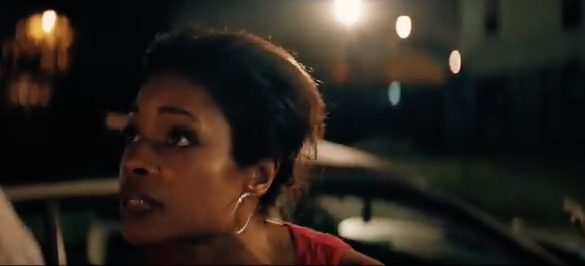

So much of “Moonlight” is centered on the idea that the lives we lead are a product of the circumstances into which we are born, and no matter how much we may try to resist or get out, we are pulled in anyway, powerless. This is illustrated by the way in which the movie comes full circle in the plight of its protagonist Chiron, underlined by the way in which the camera often circles its characters, and vigorously brought home in the scene where Chiron’s self-appointed sort of mentor and emotionally fraught mother meet in the street. She needs to buy drugs; he sells drugs; he chastises her for buying drugs when she has a son; she chastises him for selling drugs when he looks after her son; so it goes. They stand there, her growling, him grimacing, both right, both wrong, a quick, indelible re-telling of a never-ending story.


As the 2016 American Presidential Election drew nigh and then unspooled, story after story appeared in all manner of publications about small town Americans being left behind and counting on our newly elected to President to remake this country the way it was. But what was ain’t coming back, it never is and it never does, and Texas Ranger Alberto Parker (Gil Birmingham) in “Hell or High Water” coulda told you that. A Native American, he is subject to much pointed joshing from his not inconspicuous racist superior Marcus Hamilton (Jeff Bridges), most of which washes over Alberto, not because he’s indifferent but because his people have been screwed over so long, with so much of the screwing over coming so long ago that no one wants to be bothered to remember. Not that he is about to let Marcus forget. In a scene set on the corner of a four corner town across from a Texas Midlands Bank, Alberto can only shrug as Marcus laments the way of life dying all around them. “One hundred and fifty years ago,” Alberto says, “all this was my ancestors’ land. Everything you could see. Everything you saw yesterday. Until the grandparents of these folks took it. And now it’s been taken from them. Except it ain’t no army doing it.” And with that, he directs his index finger toward the bank.

“It’s those sons of bitches right there,” he says.

Tuesday, September 06, 2016

Hell or High Water

The story of David Mackenzie’s “Hell or High Water” is at least as old as Bonnie & Clyde. You remember them. They robbed banks. So do Tanner (Ben Foster) and Toby (Chris Pine) Howard, brothers, which, as narrative law dictates, means the former is a fiery loose cannon and the latter is a pent-up if dreamy good guy. Though Tanner has done time in prison, their root motives for robbery are pure, a stick-up means of stealing from the very bank set to foreclose on their mama’s valuable land, and using this taken money to ensure Toby’s two sons can hang onto the land rather than the greedy financiers instead. And they are tracked, as they must be, by a Texas Ranger, uncouthly loquacious Marcus Hamilton (Jeff Bridges).


While these bank takedowns might yield a grizzled law enforcing cynic in many movies, Bridges plays the part with more irascible humor, like a woozy combination of the Bridges version of Rooster Cogburn and Sheriff Ed Tom Bell. It’s as if his character’s gone into law enforcement simply because he knows he can use his position to needle people, which is what he primarily enjoys doing, including, but not limited to, his partner, Alberto (Gil Birmingham), a half-Comanche. As loud as Bridges performance is, Birmingham’s is soft, playing his character as if he has made a hard-won peace with Marcus and with America too. Although anger envelopes so many characters here, it is made clear that this anger’s origin can be traced directly to Alberto’s people. They were the first ones that got screwed over, and everyone else has been taking their turn getting screwed over ever since. That’s the American way.

Alberto explains this in a lengthy monologue when he and Marcus set up shop across from a Texas Midlands Bank in the long hope that it will be the next bank the Brothers Howard hold up (it isn’t). In this moment, Alberto summarizes both the movie’s motives and its air. As his speech concludes, he points at the bank across the street, an indicator of its role as society’s chief villain, and how despite the ethical and professional differences of these characters, Texas Midlands Bank nonetheless binds them all together in its greed. But the monologue just as aptly underscores “Hell or High Water’s” leisurely attitude. This might be a chase movie but that chase gently unwinds rather than rushing forward. It wants to spend time in these remote west Texas outposts its characters pass through and listen to them talk, like a waitress at the T-Bone, an incredible walk off cameo by Margaret Bowman, in which she delivers a folksy soliloquy that’s as comical as it revealing. Everyone here has something to say, and rather than simply lashing itself to the plight of its primary characters, “Hell or High Water” carves out time for everyone.

Well, maybe not everyone. Although Toby has a sweet conversation with a diner waitress (Katy Mixon), leaving a gigantic tip that’s less of a crack-the-case clue than character building, his ex-wife, played by an underused Marin Ireland whose eyes all alone seem to suggest the weariness of raising two little boys by herself, merely comes and goes as required. Whatever ailed their marriage is beside the point apparently, and Pine, who often is made to sit in frames and stare pensively off into the distance, never quite clues us into what’s behind those brooding eyes beyond his moneymaking scheme. Foster at least allows a fatalistic mischievousness to creep into his cackle, communicating a sense of knowing his inevitable comeuppance is deserved. Pine, on the other hand, gives his character the hushed spin of a one dimensional folk hero.


But he’s not really a folk hero, which Taylor Sheridan’s screenplay does not seem to know in its shallow rendering of him even as it simultaneously undercuts his supposed heroism. While Toby is made to emulate the infamous Neil McCauley Code of only wanting the bank’s money and intending to hurt no one while robbing, people get hurt anyway, and the movie curiously forgoes allowing these sins to truly settle. It seems to think that Toby simply getting back at the bank and subsequently passing off the land to his two sons so they can get rich is enough.

When people get hurt, and the brothers make their escape, they are met not by law enforcement but by locals carrying concealed weapons taking cover and opening fire. Tanner and Toby escape, barely, and what follows is a resplendent modern twist on the western, with a fleet of SUVs track the Brothers Howard, like a modern day posse. It’s mob justice, signaling a breakdown in the system, where the locals have no faith in the rangers, just as the brothers have no faith in the banks. It’s every man and woman for his or her self. In that regard, perhaps the negating of Toby’s anti-authoritarian kindliness is on point.

Throughout his film, Mackenzie and crack cinematographer Giles Nuttgen revel in the west Texas landscape, less taken with its beauty than its ominousness, indulging in blood red suns hanging low on the horizon, obscured by haze, and offering a massive brush fire that has sent ranchers and their cattle scurrying. In this latter moment, the prairie almost looks like the apocalypse, and that’s the mood befitting the entire film. Hell or High Water? Pfffft. Hell’s already here.