' ' Cinema Romantico: Michael Mann
Showing posts with label Michael Mann. Show all posts

Wednesday, September 10, 2025

Mann Men (For a Livin’)


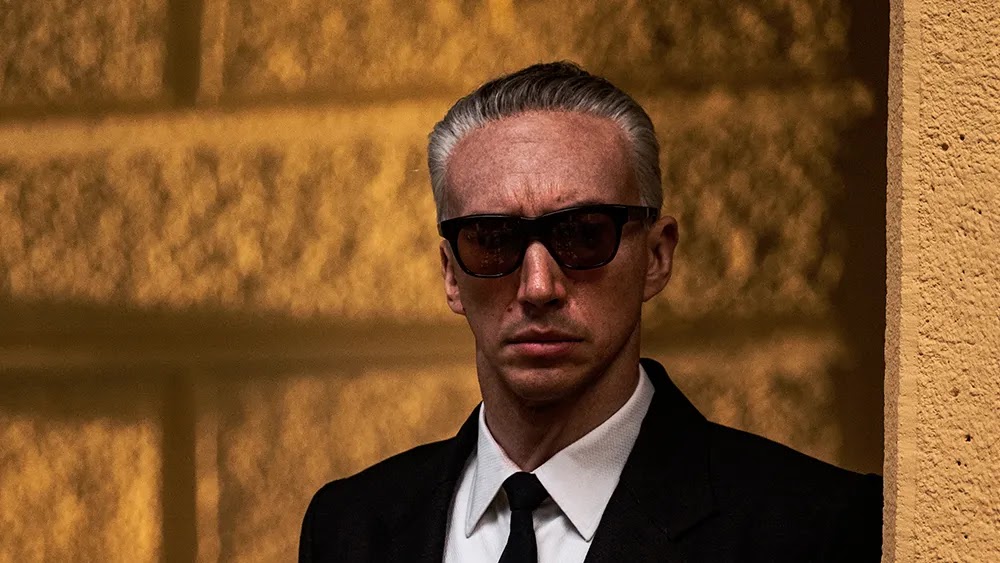
Friend of the Blog Jaime recently forwarded me a Los Angeles Review of Books piece from March by Clayton Purdom dissecting the oeuvre of Michael Mann, the greatest living American filmmaker, and the work-obsessed men who dominate it. Mann Men, Purdom deems them, tracing them and their professional dedication from James Cann’s titular “Thief” (1981) all the way up to Adam Driver’s eponymous Enzo “Ferrari” (2023). I especially appreciated the latter. Maybe because “Ferrari” was a movie of an all but extinct breed, one in which Mann specializes, the big budget Hollywood art film, it seemed to get lost in the year-end shuffle with so many other releases but was deserving of the rigorous analysis Purdom provides. Indeed, the whole piece is exhilarating, and electrically written, and exhaustive. And yet, in devoting over 4,000 words to Mann’s oeuvre, it never once mentions not just my personal favorite Mann movie but my favorite movie period, “Last of the Mohicans” (1992).

Purdom might reference “Collateral” (2004) as a popcorn movie, but “Last of the Mohicans” is by far Mann’s poppiest movie. It is vintage Hollywood, as Charles Taylor put in his definitive take on the film for Salon, reduced to the most primal of emotions which is, perhaps, why it doesn’t lend itself as readily to academic-styled analysis. Based as it is on James Fenimore Cooper’s novel, in a colonial America where indolence, to paraphrase the memoirs of Margaret Moncrieffe Coghlan, was totally discouraged, Mann’s film adaptation, based in part on the 1936 film adaptation, is in its way about industrious men in pre-industrial America. The two Mohican Indians, Chingachgook (Russell Means) and Uncas (Eric Schweig), and their adopted son Hawkeye (Daniel Day-Lewis), are hunters and trappers and you’re telling me that ain’t work? Living in 1757 by trapping is harder than cracking safes and winning the Mille Miglia put together.


“Last of the Mohicans” begins, in fact, with the three men hunting an elk. In Native American culture, the killing of an animal is something sacred, which we see in how the three men honor and give thanks to the vanquished beast, and which we see even more in how Mann evokes the hunt itself, venerating these men and their work with a sweeping visual and musical grandeur. Mann conveys their cooperative effort with nary a word, merely the instinctual understanding of a hundred similar hunts, foreshadowing so many ensuing workmanlike scenes, like when they track a Huron war party and rescue a British regiment, chasing off the enemy with a practiced, reverential ease. When Hawkeye dispatches one Huron warrior in hatchet-to-hatchet combat, you sense the choreography of the movie giving way to the choreography of the character, like our hero knows the moves of his opponent in advance. In these moments Day-Lewis exudes Jada Pinkett Smith’s line from “Collateral” that Purdum quotes: “Take pride in being good at what you do?” Indeed, the famed commitment DDL brings to all his roles effortlessly blends with the commitment Hawkeye brings to what he does and the climactic moment when Hawkeye shoots two muskets at once feels less like an exclamation than a variation of Purdum’s cited Mann Men creed: act like you’ve simultaneously shot two muskets before. 

Of course, the Mohicans also help rescue the Munro sisters, Cora (Madeleine Stowe) and Alice (Jodhi May), with whom Hawkeye and Uncas, respectively, will fall in love. They might have intended to trap during the fall and winter in Kentucky, but something happens, to quote Susan Sarandon in (forgive me) “Elizabethtown” that is not part of the plan. And maybe that’s why after all these years, “Last of the Mohicans” is still my number one Mann movie. It’s a significant irony, after all, that a guy hung up on what people do is my favorite filmmaker when few things matter less to me than what I or people at a dinner party do. (Tell me your favorite color, your favorite regional barbecue, your favorite Canadian province, anything else!) And so, rather than maintain discipline of a rigid professional code in the manner of most Mann men, Hawkeye eschews his work’s strictures to throw himself headfirst feet-first over the falls of passion. Sometimes, brother, those beaver pelts can wait.

Thursday, January 18, 2024

Ferrari

The life of Enzo Ferrari spanned 90 years, rich enough to fill an almost 500-page book by Brock Yates. But in bringing “Enzo Ferrari: The Man, The Cars, The Races, The Machine” to the big screen, director Michael Mann, working from a long-gestating script by the late Troy Kennedy Martin, eschews an overarching account of Italy’s most famous racing and sports car entrepreneur with big slabs of critical Life Details to instead convey one year in Enzo’s life, 1957, full of personal and professional tribulation and culminating in a tragic Mille Miglia, the once-famed open-road motorsport endurance race. Mann has always favored exerting extreme pressure on his characters to see how they respond, and by narrowing his focus in “Ferrari,” his aim is not to summarize Enzo’s life but more specific, to get under the man’s hood, so to speak, and see what makes him tick.


“Ferrari” is not a heist movie but sort of opens in the vein of one with Enzo lighting out from the Modena countryside home he keeps with his mistress Lina (Shailene Woodley) by giving his car a running start, hopping behind the wheel, letting it coast along, and then, finally, starting the engine. He needs to make it back to Bologna in time to have morning coffee with his wife Laura (Penélope Cruz), who knows of Lina, and who demands this ritual to maintain appearances. Putting up such fronts is essentially the crux of “Ferrari’s” drama. Bologna reveres Enzo, which is demonstrated in an early scene at a barbershop where he entertains the regulars with comic witticisms while literally maintaining his appearance by getting a shave. Indeed, Driver wears his suits, wears his hair, and like in a brief scene of his character on the road in which rapid-fire cuts capture him coolly shifting gears, he exudes an air of control at all times, indifferent to the swirling chaos, unaware it’s threatening to consume him.

“Two objects,” Enzo explains at one point, “cannot occupy the same point in space at the same moment in time.” He’s referring to cars on a racetrack, but he may as well be highlighting the impossible dualities of his own life. Indeed, an early scene of Enzo attending Mass does not so much juxtapose the ovular communion wafers with the image of so many ovular stopwatches as Ferrari’s rival Maserati breaks a record on the track as link them together, racing inextricable from life itself. This idea is literalized in Enzo’s relationship with Laura given that she owns half his Ferrari business, and because the company is verging on bankruptcy, and Enzo is told he needs complete control for the necessary steps to keep it afloat, he must convince his relatively estranged wife to sign over her half to him, a volatile seesaw. In their frequent spats, and occasional eruptions of sex, they are at once made for each other and utterly incompatible, manifesting “a terrible joy and deadly passion.” That’s Enzo again, talking about his own life talking about racing. 

Their scenes together are as ferocious as any on the track, and on full display in their introductory quarrel when Laura pulls a pistol, takes deliberately bad aim at her exasperating man, and shoots, leaving a hole in the wall not far from Enzo’s head. It’s Chekov’s Gun, in other words, but going off already, in a manner of speaking, which not only immediately establishes the combustible nature of their relationship, but how death permeates “Ferrari” from the figurative waving of the flag. Mother and father still grieve for their son Dino, having died only a year earlier from muscular dystrophy, making daily visits to his grave. Dino’s presences hovers over everything and is complicated by Enzo’s son Piero (Giuseppe Festinese) with Lina, of whose existence Laura is unaware, though comes to suspect, as if the 12-year-old’s illegitimacy is preventing cauterization of the gaping emotional wound.  

The serene countryside scenes in Modena contrast against the more frenzied nature of Enzo’s life in Bologna, but too often, that’s all they are, symbols, not least because Woodley lacks the same pulse as Cruz. The latter seems to receive cues from the opera sequence midway through, virtually transmitting emotions directly to us as a soloist might with an aria. And though Lina is a calmer character, she is meant to instill a passion of her own, that she won’t just sit around in the shadows, and Woodley struggles to effuse the humanity and electricity of that struggle. I will not comment on the quality of the accent, because that’s out of my jurisdiction, but I was also left wondering if Woodley was mistakenly charged by Mann with focusing so much on the accent, she forgot to give a performance.


Just as Enzo struggles to compartmentalize these separate lives, he struggles to compartmentalize the racetrack from his home life too. The opening images of a young Enzo in a race car inform the movie to come, one in which no longer fit to race, he is left to issue demands and instructions to his drivers, transforming them into avatars, an extension of his ego, and of his obsession. The racing scenes are themselves further extensions of that obsession. Thrilling isn’t the right word, they are more intense than that, no, more visceral, even elegiac, as conveyed in a sequence where Ferrari drivers compose letters to their loved ones before going off to the Mille Miglia. One of Enzo’s cars might win, but victory is compromised by death, a scene so unsentimentally gruesome as to take your breath away, a man at the wheel who is confident, and in control, until suddenly, he is not, wreckage strewn behind him.

Thursday, April 01, 2021

One More Great Michael Mann Movie Moment


This blog’s love of Michael Mann is no secret. “The Last of the Mohicans” is my favorite movie. In frequently writing about “The Insider” over the last four years I have begun to suspect that it might, just might, be The Greatest Movie Ever Made. My blog’s banner is a still from “Heat!” And so, my feelings were a little bit hurt when The New York Times failed to ask me to contribute to its Michael Mann retrospective – 40 Years of Michael Mann. 11 Great Movie Moments. – to commemorate the 40th anniversary of the director’s theatrical debut, “Thief.” Oh sure, A.O. Scott was once a finalist for the Pulitzer, but did A.O. Scott ever road trip to North Carolina to see the filming locations for “The Last of the Mohicans”? I didn’t think so.

Not kidding aside, the NY Times contributors did fine work, chief among them Amy Nicholson talking about how that look between Hawkeye and Cora, the one I have written about before, in many forms, is The Whole World in a Gaze. And I liked Ben Kenigsberg talking about “Collateral’s” suspense being rendered in light and shadow. There were, rightfully, two entries on “The Last of the Mohicans” and “The Insider”; there was even an entry on Mann’s inconsistent but undervalued “The Keep.” There was, however, no entry on “Miami Vice”, the fourth Mann masterpiece in addition to that astonishing 90s triad. How could this be? Manohla’s on staff and she gets “Miami Vice”; you couldn’t have penciled Manohla in for a quick graph? Fine, I thought, I’ll do it. [Clears throat.]


Though in making “Miami Vice” (2006) Michael Mann borrowed the underpinnings of his celebrated 80s TV show, he rejected everything else, utilizing a digital camera to virtually paint a piece of cinematic impressionism, eschewing rubbish like character and plot to chisel a movie from mood and tone and gesture and fleeting moments. In a meeting with an informant, Sonny Crockett (Colin Farrell), on the verge of having his personal and professional boundaries become indistinguishable, turns to gaze upon the ocean, the dialogue obfuscated by the crashing surf. It seems to momentarily suggest the end of all complication. Then, just like that, the moment is gone.

Thursday, September 26, 2019

Some Drivel On...The Insider

When the research scientist giving 1999’s stone cold masterpiece “The Insider” its title, Jeffrey Wigand (Russell Crowe), is laid off from his job at tobacco giant Brown & Williamson, director Michael Mann recounts this moment not explicitly through dialogue – “You’re fired”, or some such – but by a series of simple cuts. As Wigand boxes up items in his office, we see, through the reflective tint of his glasses, co-workers, or ex-co-workers, in white lab coats mingling with cake outside his office window. Mann then switches to a reverse shot of Wigand seen through his office window so we can hear the low din of the people mingling, that noise deliberately playing off the eerie silence of Wigand’s office. This moment speaks not only to whatever Wigand’s vaguely defined role was – “the work I was supposed to do might have had some positive effect,” he says later – but to his emergent role as a whistleblower, and the lonely road he will trod in calling out his Brown & Williamson cohorts for peddling a deliberately addictive product. These people out here, by shutting up and going along, they get to have their cake and eat it too; this guy in here, he gets told to box up his shit and hit the road.


I’d be lying if I said “The Insider” wasn’t on my mind because of the whistleblower currently in the news, but then “The Insider” has been on my mind a lot in the last 3 years, it and its scintillating exploration of the truth, and all that the truth entails, less Black & White than Bitter & Murky, embodied in that phone call Wigand fields from Lowell Bergman (Al Pacino), the 60 Minutes producer who has gone to great lengths to amplify his whistleblowing through a TV segment where Wigand will confirm that 1.) The Brown & Williamson CEO lied under oath when he said nicotine was not addictive because 2.) Nicotine is absolutely manufactured to be addictive. With Bergman questioning details of Wigand’s past being fed to the press by Brown & Williamson as part of a deflective smear campaign, Wigand defiantly intones: “I told the truth.” Bergman explodes: “That’s not the fucking point, whether you told the truth or not!” And when Wigand repeats “I told the truth”, Crowe lets all the defiance out, a variation in line reading evoking how The Truth can look different refracted through a different light, not simply “the property (as of a statement) of being in accord with fact or reality”, per Merriam-Webster, but something, improbably, depressingly, more malleable.

Crowe carries that truth with him in his performance, a nigh permanent tight-lipped expression embodying the facts he can choose to emit and a kind of hunched-over walk evoking the burden on his back. This burden is brought home in the sequence where, through Bergman’s finagling, Wigand goes to Mississippi to testify in a lawsuit against Big Tobacco to put what he knows on the public record to wrestle free of his confidentiality agreement. He is told, though, by one of the Mississippi attornies, Scruggs (Colm Feore), about a B&W gag order in the state of Kentucky, meaning that despite being free to testify here, back home he can be found in contempt and put in jail. “How does one go to jail?” Wigand asks, reciting his litany of family responsibilities. The ensuing scene, in which he debates what to do, only looms larger in my mind with each passing year, a masterwork of acting, editing, composition, and narrative, leaving out so much and still saying everything.


Outside Scruggs’s home, overlooking the Gulf, we see Bergman, on the left, and Wigand, on the right, from behind, the former telling the latter he heard about the gag order.


“I don’t know what to do,” Wigand says to Bergman.


And then Wigand walks off, away from Bergman, pointedly alone, underscoring The Whistleblower’s place in the world.


Then, Mann cuts away from the Gulf and outside the courtroom where the car carrying one of Wigand’s other attornies, Ron Motley (Bruce McGill), pulls to a stop.


Motely gets out-


A walk that Mann tracks with in this shot, McGill’s head-up, full-speed-ahead walk juxtaposed against Wigand’s more mournful gait.


And then Motely disappears into the press scrum.


Mann cuts back to Wigand, the gently lapping waves a pointed contrast to the cacophony of the media hollering at Motley while simultaneously reminding us that everything that may or may not happen in that courtroom hinges on what his decision.


Indeed, in the very next shot we return to the courtroom as Motley enters.


And as he does, the attorney for Big Tobacco looks up, as does everyone behind him, including the attorney for the Brown & Williamson CEO, the one guy standing up, played by Gary Sandy, who, in just a couple scenes, gives a great performance of smug dickitude, which you can see in his expression here, an impeccable “Well I’ll be, this motherfucker showed” cocky grin.


And the lead attorney leans toward a colleague to ask him to ask Motley if his client – that is, Wigand – plans to show too, illuminating the tension.


Back to the Wigand, seen from afar, trudging in that hunched-over walk, still lost in thought.


He returns to Bergman, now joined by Scruggs.


“I can’t seem to find the criteria to decide,” he says to Bergman. “It’s too big a decision to make without being resolved in my own mind.”


“Maybe things have changed,” Bergman offers.


And then Wigand turns back around-


-leading directly to the most transcendent of all Michael Mann motifs, staring into the distance, tantalized for a moment by the end of all complication. 


And then he turns back around, lingering for a moment on the police presence, as if ruminating on his present place in the world.


Wigand says: “What’s changed?”


“You mean since this morning?” Bergman asks.


“No,” Wigand says, “I mean since whenever.”


And though you can’t see in the screenshot (it is, after all, a motion picture), Pacino has Bergman quietly fall back in his posture, like he’s been blown back by the weight of these words.


And then Mann cuts back to Wigand, but from the side rather than over-the-shoulder, emphasizing that this moment, this decision, is his. He says: “Fuck it. Let’s go to court.”


And this...well, this might as well be me. Because that’s how I feel every time I think of this moment, like I can hardly believe it. That’s “What’s Changed?” does so much work here, suggesting that the context, personal or otherwise, stands entirely apart from the simple fact of the matter. Would that it were so simple. Rewatching it this week brought me to a few tears.

In another movie, that would be the end, or the beginning of the end. Wigand would go to court and McGill as Motley would give that breathtaking soliloquy shutting the Tobacco goobahs down, and Wigand would give his truthful testimony – “It produces a physiological response, which meets the definition of a drug” – and he and Bergman would enjoy triumphant cocktails. But that’s not the end. That’s hardly the start. If Wigand has told the truth, and if we are practically raised from birth to believe that so long as you tell the truth everything will be set right, well, to quote Christopher Plummer’s version of 60 Minutes reporter Mike Wallace, “Get in the real world.” The notion of the truth as something less than fixed is evinced by Gina Gershon’s CBS lawyer, a scene I’ve broken down in depth, where she explains Wigand’s veracity is, in fact, an issue, not an elixir, constrained by his factualness, a moment as comical as it is sad as it is WTF. And so CBS Corporate is constrained by Brown & Williamson, and CBS News is constrained by CBS Corporate, capitalism v journalism, the most ancient American grudge match, transforming the back half of “The Insider” into a journalistic thriller. Not one in which Bergman tries to get the truth, obviously, a la “All the President’s Men”, because he already has it, plain as day, but tries but tries to get the truth out to the people, which proves even more difficult.


Spoiler Alert: he does get the truth out, leaking Wigand’s Mississippi deposition to the press, putting the truth in print, spurring the process to where 60 Minutes can, finally unconstrained, air their Wigand story in full. You see Bergman watching this piece air from an airport bar, though Pacino emits an air not of elation but exhaustion from having moved such figurative mountains simply so that everyone surrounding him in the shot also turned toward the TV can hear Wigand blow the whistle. This suggests victory, echoed in Bergman’s wife (Lindsay Crouse) telling him “You won”, though the tone Mann ultimately strikes is more dirge-like, both in the accompanying Lisa Gerrard/Pieter Bourke score to Bergman responding, “Yeah? What’d I win?” In the following scene, when he steps down from 60 Minutes, Bergman tells Mike Wallace, revealingly, “What got broken here doesn’t go back together again.”

Mann is not belittling what Wigand has done, mind you, but rather holding it up as a last stand, the final gasp of an ideal. “The Insider”, I realize more and more with each passing year, is an elegy for the truth.

Wednesday, September 19, 2018

Parsing Miami Vice: Screen Shots on the Figurative Wall, Part 3

Parsing Miami Vice: Screen Shots on the Figurative Wall is Cinema Romantico’s sporadic pseudo art exhibition in which we peruse frames from Michael Mann’s Miami Vice (2006) like the paintings they pretty much are.

Back in July, My Beautiful, Perspicacious Wife and I attended the Chicago Art Institute’s John Singer Sargent exhibition, appropriately titled John Singer Sargent and Chicago’s Gilded Age. Sargent was a painter known predominantly for his portraits, though this exhibition encompassed other aspects of his work, and he was often hired by those for whom the Gilded Age was particularly beneficial As such, many of the portraits, I learned, emphasized clothing and accoutrement as much as the sitting person’s expression or visage.

Michael Mann got his start writing the pilot episode for Aaron Spelling’s “Vega$”, a city Mann praised in Lynn Hirschberg’s excellent New York Times 2004 profile of the director, offering it the sort of compliments one might have bestwoed upon Gilded Age Chicago. And the Reagan Years were nothing if not their own sort of Gilded Age, and Mann’s small screen version of “Miami Vice” took flight in the 80s, a show where Mann, as Hirschberg noted, banned earth tones. “He can spot the wrong tie in a sea of extras,” Hirschberg wrote, “and will park a boring white car next to a snazzier baby blue model to enhance the mood. ‘Adding white always makes color burn a little,’ (Mann) has said. '’I got that idea from a 20th-century British painter.’”

Mann’s movie version of “Miami Vice”, shot in high def, was grainier and moodier than the TV show, though Mann still lingered over the benefits, if accompanying dangers, of a different kind of privilege. When the movie’s detectives working deep undercover find themselves face to face with Arcangel de Jesus Montoya (Luis Tosar), kingpin of a vertically integrated multinational drug cartel, and his accountant Isabella (Gong Li), in the back of an SUV, Mann briefly lingers over shots of each character’s wristwatch, a timekeeping emblem of power and wealth. Later, in a sequence at his compound near Iguazu Falls, we glimpse Montoya in his master suite, relaxed in bed, wearing just a pajama top and boxer shorts, smoking a cigar, supremely looking the part of a big shot, which Mann shows in long and medium shots to ensure we get the full picture. Eventually, however, in conversation with Isabella, Mann cuts to a close-up.


My favorite Sargent portrait in the exhibition was that of ‘Miss Priestley’ (c. 1889). The placard indicated that Sargent was as taken with Miss Flora Priestley’s dress, as well as the flowers she was holding, as he was her actual visage. And yet the visage is what struck me. The arched eyebrows, the superciliousness with which she is looking away, the slightly opened lips, as if she is about to say something snide; it’s as if the face is telling you that she could not care less what she is wearing or holding in her hand. As I looked at ‘Miss Priestley’, I kept thinking that if I was in the editing room, I would have been imploring for a cut to a close-up. 

As I looked at ‘Miss Priestley’, I kept thinking of this close-up in “Miami Vice”, and how Montoya is looking away, a la Miss Priestley, though in this case you can feel the fire of his eyes, as if the red-hued backdrop is smoldering coal feeding into his optic furnace, directed at someone rather than dismissing everyone. Tosar was a Spanish actor with whom I was unfamiliar going in, but casting your gaze over this close-up for a good long awhile, it’s not hard not to think he must have been handpicked by Mann simply because of his formidable eyebrows and coronal mass ejection eyes, readymade for a cinematic portrait remodeling gilded as ravenous sin.

Thursday, June 28, 2018

Michael Mann's Miami Vice as an Art Exhibition, part 1

The DVD version of Michael Mann’s “Miami Vice” (2006) opens with the camera emerging from beneath the water to catch up with a speedboat race already in progress, though its presentation is conspicuously stripped of adrenaline such a scenario might suggest, a prologue as a slow burn. This is in contrast to the theatrical version, which is less of a gradual entry than a chaotic airdrop right into a cacophonous club scene; it’s like forgoing Harold Faltermeyer’s “Top Gun” intro and going straight to Kenny Loggins. When I saw this scene in the theater a dozen years ago, it gobsmacked me, like the “Boogie Nights” “Best of my Love”-fueled intro nearly ten years prior. When I purchased the home video version of “Miami Vice”, I sat there and watched that 90 seconds over and over and over. And of all the shots, the one I most consistently found myself drawn to was this.....


I have thought a lot about that shot over the last dozen years. Why, however, it has frequently popped into my mind is something I have always found difficult to explain. And I thought of that image on a Saturday morning last month in London in attending an exhibition at the National Gallery titled “Monet & Architecture” upon finding myself face to face with Claude’s 1872 outpouring of impressionism The Wooden Bridge. The exhibition illustrated the way in which Claude frequently utilized buildings in his work not as a means to highlight them but to highlight the way they refracted light. He also, however, as the exhibition outlined, sought to juxtapose industry against landscapes, like his Train in the Countryside, which I saw last fall at the Musée d’Orsay, where steam roils from an unseen train engine obscured by a line of lush trees. And in The Wooden Bridge a carriage traverses a bridge built during the Franco Prussian War, signaling progress, though the carriage is simultaneously glimpsed in one of those patented heartstopping Monet reflections in the water below, making it seem as if the manmade and natural worlds are colliding, or perhaps fading almost indecipherably into one another.


And because I bring everything down to movies, what popped into my head as I let The Wooden Bridge wash over me was a shot from my all-time favorite movie, “Last of the Mohicans”, this shot.....


It had kind of occurred to me, I guess, and and has no doubt absolutely occurred to cineastes more advanced than myself, but standing there in the National Gallery in that moment I realized how Michael Mann is so often using cinema as his own canvas, composing frames that could double as paintings.

And so as I gazed at The Wooden Bridge and returned to that shot of “Last of the Mohicans” in my mind, so did my thoughts turn back to the aforementioned shot in “Miami Vice”, which we return to now.


I mean, it loses something, or maybe is just viewed differently, if not seen as a moving picture, the way it begins with the camera gliding right to left behind them and past Naomie Harris’s character and then flips to a shot in front of them just as Naomie Harris turns toward where the camera is set with this incredible, ineffable No Scrubs look on her face that is the whole reason why we should see movies on big screens and not at home. But then, the camera cuts to the above shot from the side.

The two men standing rock still are juxtaposed against the whirring everything-ness in the left of the frame. These are men certain in their worldview, indifferent to the noise, which they have put behind them. Ah, but there is ambiguity in the fact that we cannot see whatever it is they are so intently focused on, and that they are rooted to the frame’s darker section might suggest that whatever it is they are so intently focused on is worthy only of trepidation. Thinking of the shot this way makes me dizzy and giddy. I want to frame it and hang it in the Art Institute and go down there and look at it every day for twenty minutes.

And that is why the Cinema Romantico plan going forward is to return to “Miami Vice” every now and again, maybe monthly, maybe bi-monthly, who knows, whenver the spirit moves us, to call up frames from Mann’s movie and treat them as if they are painted compositions hung in a gallery, our first ever movie blogging art exhibition, Parsing Miami Vice: Screen Shots on the Figurative Wall. It does not even cost extra to get in.

Wednesday, September 14, 2016

Heat, the Original Face/Off

I originally intended to write another in my Shout-Out to the Extra series. The extra I wanted to write about was featured in Michael Mann's "Heat", which was in my mind after reading about the film's anniversary screening in Los Angeles last week. The extra appeared in one of the film's diner sequences, when Neil (Robert DeNiro) and his regular bank robbing crew, Chris (Val Kilmer) and Michael (Tom Sizemore), meet up with the extra member of the crew, the illustriously monikered Waingro (Kevin Gage), who was along for one robbery and went semi-rogue. The extra is this guy...


He hears a noise, which is Neil slamming Waingro's head against the table, and so he looks up and toward the area of disturbance. And he gives his look an air of concern, as if he might tend to the matter if he needs to. 


Except as soon as he looks up, Sizemore has Michael throw the guy this look in return.


And the extra looks right back down. Sizemore's expression is memorably fierce, sure, but its ferocity is understood through the way in which the extra reacts. He seems to be thinking: "Nope, not gonna get my skull cracked open today." And I like to imagine him reading the same paragraph in the paper about the Lakers, over and over, trying to act like he's paying attention to what it says and not just thinking "Don't look up. Don't look up."

And in thinking about that sequence, I thought about how "Heat" is actually filled to the brim with moments like these, these face-offs between characters. "Heat" is a lot of things, of course. It is the quintessential Cops & Robbers saga; it is Michael Mann's second of three masterpieces in the 90s; it is the movie that finally brought Pacino & DeNiro together on screen; it is the movie that made many brooding males want to go to Fiji to see iridescent algae. But, I realize now, it pre-dated "Face/Off" by two years. Not, of course, in that Pacino and DeNiro literally changed faces, though wouldn't that have been something, but in Mann, maestro of machismo, taking dudes (and maybe not just dudes!), orchestrating Face Offs between his myriad characters, so many Face Offs, a litany of Face Offs, and Face Offs of different varieties.

I mean, you've got your basically famous Face Offs, the Face Offs between not just Cop & Robber but Pacino & DeNiro. You've got the Face Off in the diner......  


And then you've got the nicely conceived, thinking-outside-the-box Face Off when they aren't in the same room.


But there are Face Offs that go beyond Pacino & DeNiro. Here, for instance, we have your classic Face Off That Isn't Really A Face Off. Michael says "Stop talking, okay slick" which leads Waingro to remove his sunglasses in the manner of a man about to throw down. Michael, however, doesn't turn to stare back at Waingro until Waingro has finally looked away, two men who fancy their balls as being made of brass and are each waiting to see if the other looks first. 


Here we have a Face Off Between Friends. This is when Chris is telling Neil that he loves Charlene (Ashley Judd), his wife, which prompts Neil to provide the Pop Culture Manifesto that is The 30 Second Rule about being willing to walk out on anything in 30 seconds flat if you feel the heat from the around the corner, including the woman you love. And Kilmer......well, Kilmer has become a punchline these days and what a tragedy, because man, that dude could act. Kilmer doesn't have Chris make up his mind in the moment; he decides that Chris has long since made up his mind about Charlene. That's why his "For me the sun rises and sets with her, man" is so effing romantic. Because he just, like, says it. Like, it's ingrained truth. And that leads to the Bro just re-affirming what the other Bro has said which is just austerity at its most heartrending which is just Mann at his most breathtaking.

"Yeah?"

 "Yeah."


Here's a three person Face Off, crispy edited, as Van Zant (William Fichtner), the archetypal money launderer, in conversation with Waingro who has offered his services to dispense with Van Zant's Neil problem, looks at Waingro, then at his bodyguard (Henry Rollins), and the bodyguard looks back, and Waingro at the bodyguard before looking back to Van Zant with a look that says "Hombre, I got all day." (These successive screen shots also reveal a continuity error where Henry Rollins is looking but that's for people who aren't me to complain about.)


Here's the Face Off that requisitely brings Neil face to face with his own beloved 30 Second Rule, which he will adhere to, because he has to, and becomes searing for the way Amy Brenneman has Eady's bewilderment melt into pain and for the way DeNiro plays the moment in a kind of "Wow, I really am about to walk out on this woman in 30 seconds because I feel the heat around the corner."  


This is actually my favorite Face Off in the movie, when Neil approaches Don (Dennis Haysbert), an ex-con once housed in the same prison as Neil, and pitches him a job as a getaway driver. "One answer. Right now. Yes or no." Then, Neil waits. He looks at Don. Don looks back. Don looks around, not like someone is going to overhear them but like he's wondering if someone will stop him from doing what he knows he's going to do. Because that's what this Face Off is - it is a Fatalistic Face Off. Neil isn't there to recruit him; Neil is there to re-claim him.


This is an incredibly underrated Face Off, and it's a single shot Face Off because Mann captures DeNiro's expression in the mirror, though Ashley Judd's expression trumps DeNiro's. This is in the midst of Charlene cheating on Chris, which is fairly understandable in the film's context, and Neil turns up to lecture her on how she will give Chris another chance. And Judd does not play it obediently. Like, DeNiro is something of a master of the "Can you believe this fucking guy?" reaction shot, but in this moment Judd unleashes one helluva "Can you believe this fucking guy?" reaction shot herself. Ashley isn't allowed a lot of heavyweight roles, because of Hollywood and all that, but here she went toe-to-toe with a former Heavyweight Champion of the World, and brother, she hit back.


We conclude on this Face Off, the Face Off That Isn't Really Even A Face Off. This is Chris buying explosives for a job, a seemingly nothing moment that, in fact, is so infamous that "Rushmore", of all things, kinda parodied it. And it's so infamous because of, again, Kilmer's quirky brilliance, where he shows his fake ID with a look that is at once vacant and intimidating, as if he's telepathically communicating to the guy, "Don't look up at me. Because if you do, it won't end well."